Glaucoma Treatment
Catch it early and you keep your sight. Catch it late and we can only hold the line
Glaucoma damages the optic nerve quietly. It takes your side vision first, painlessly, and the brain fills in the gap so convincingly that most people notice nothing until a good part of the nerve is gone. What is lost does not come back. Everything we can do depends on finding it before you feel it.
What glaucoma actually does
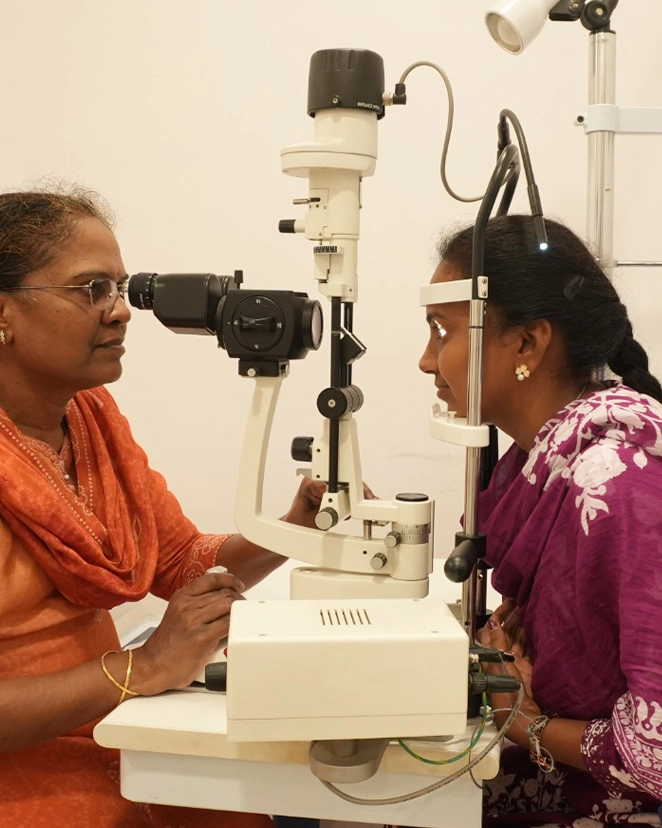
Your eye makes a clear fluid continuously and drains it out through a filter in the angle where the iris meets the cornea. If that drain works poorly, pressure inside the eye rises. Over months and years, that pressure damages the optic nerve — the cable of roughly a million fibres carrying vision from your eye to your brain. Fibres die from the outside in, so the first losses are in your peripheral field, where you are least likely to notice them.
This is the part people find hard to accept: treatment does not restore lost vision. Drops, lasers and surgery lower pressure so the remaining nerve fibres survive. That is a genuinely good outcome — most people diagnosed early keep useful vision for life — but it only works if we start before the damage is severe. Glaucoma is a condition you manage, like blood pressure, not one you finish treating.
Not sure if this applies to you?
A single examination answers it definitively. If you do not need treatment, we will tell you that too — and when to come back.
Not one disease, but four patterns
They differ in how the drainage fails, how fast they move, and whether you feel anything at all. The treatment follows the type, so getting this right matters.
Primary open-angle glaucoma
The commonest form, and the silent one. The drainage angle looks normal but the filter itself works poorly. Pressure creeps up over years with no pain, no redness and no blur until the field loss reaches the centre. It is found on examination, not by symptoms.
Angle-closure glaucoma
The iris crowds the drainage angle and blocks it. It can build up slowly, or shut completely in an acute attack: severe eye and head pain, rainbow haloes around lights, a red eye, blurred vision and often vomiting. That is a same-day emergency — pressure can destroy the nerve in hours.
Developmental and congenital glaucoma
Present at birth or appearing in the first years. Watch for a baby who keeps eyes shut in light, tears constantly without infection, or has an eye that looks unusually large or a cornea that looks hazy. It needs surgery, and it needs it early.
Secondary glaucoma
Pressure rise caused by something else: long-term steroid use, an old injury, advanced diabetic eye disease, uveitis, a mature cataract, or a previous surgery. Treating the underlying cause is part of treating the glaucoma.
Normal-tension glaucoma is a real and under-recognised variant: the optic nerve is being damaged despite pressure readings that sit within the normal range. This is exactly why we look at the nerve and the visual field, not only at the pressure number.
What raises your risk
Glaucoma has no early symptoms, so risk is what decides who gets screened and how often. If any of these apply to you, an annual check is not optional.
- Age 40 and aboveRisk climbs steadily from the forties. A first full glaucoma evaluation at 40 gives us a baseline to compare every later scan against, which is worth more than any single reading.
- Family historyA parent, sibling or child with glaucoma raises your risk several-fold. It is the single most useful question we ask, and the one most people have never been asked.
- Raised eye pressureHigh intraocular pressure is the main modifiable risk factor. Not everyone with high pressure develops glaucoma, but they need watching.
- Thin corneaA thin cornea reads pressure falsely low and independently raises risk. Pachymetry takes seconds and changes how we interpret every reading afterwards.
- Steroid useLong-term steroid drops, inhalers, nasal sprays or tablets can push pressure up in susceptible people. Self-prescribed eye drops bought over the counter are a common cause in our clinics.
- Diabetes and high myopiaBoth raise risk. High myopes are also harder to assess, because a stretched optic disc can look suspicious when it is not — and can hide real damage when it is.
- Previous eye injury or surgeryBlunt trauma can damage the drainage angle and cause glaucoma years or even decades later. Mention any old injury, however long ago.
Why one pressure reading is not a diagnosis
People are told "your eye pressure is fine" and go home reassured. Pressure fluctuates through the day, and a thin cornea can hide a high reading. A glaucoma assessment is five or six tests read together.
Intraocular pressure (Goldmann applanation)
The reference standard for measuring pressure, done at the slit lamp after a numbing drop. Air-puff machines are a screening tool, not a diagnostic one — we confirm on Goldmann.
Gonioscopy
A mirrored contact lens lets us look directly into the drainage angle to see whether it is open or closed. This single test decides whether you need drops or a laser iridotomy, and it cannot be skipped.
Optic disc examination and photography
A dilated look at the nerve head, documented with a photograph. The image matters as much as the finding — next year we compare, rather than rely on memory.
OCT nerve fibre analysis
A scan that measures the thickness of the retinal nerve fibre layer in microns and compares it against age-matched norms. It often shows thinning before the visual field test picks anything up.
Humphrey visual field testing
The perimetry test maps where you have already lost sensitivity. It takes patience and usually needs repeating, because the first attempt for most people is a learning curve rather than a result.
Pachymetry
Corneal thickness, measured in seconds. It corrects your pressure reading and factors into your long-term risk. Without it, a pressure number is only half the information.
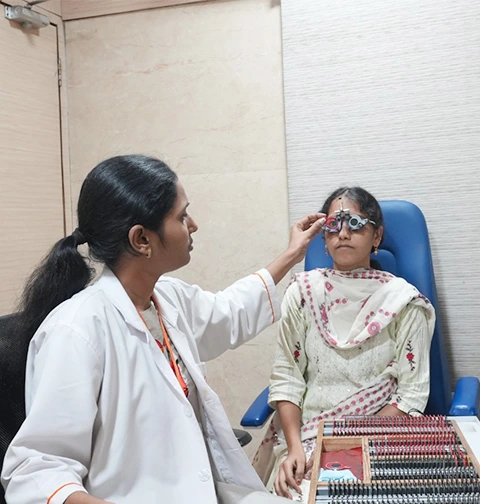
We do not start lifelong treatment on a single visit unless the picture is unambiguous. Where findings are borderline, we repeat the tests and watch, because putting someone on drops for thirty years is not a decision to make casually either.
Lowering the pressure, in escalating steps
Every treatment for glaucoma does one thing: reduce pressure on the optic nerve. We start with the least invasive option that reaches your target and move up only when it stops holding.
| Treatment | How it works | Usually chosen when | What to expect |
|---|---|---|---|
| Eye drops | Reduce fluid production or improve outflow | First-line for most open-angle glaucoma | Daily, indefinitely; several classes to try if one is not tolerated |
| SLT laser | Gentle laser to the drainage meshwork to improve outflow | Instead of or alongside drops in open-angle glaucoma | Ten minutes in clinic; effect lasts one to five years and can be repeated |
| YAG laser iridotomy | A tiny opening in the iris to relieve angle closure | Narrow or closed angles, and after an acute attack | A few minutes per eye; often done in the fellow eye too, preventively |
| Trabeculectomy | Creates a new drainage channel under the eyelid | Pressure uncontrolled on maximum drops, or advanced damage | Day-care surgery; close follow-up for weeks while the drainage settles |
| Ahmed glaucoma valve | A small implant that shunts fluid to a reservoir | Failed trabeculectomy, or difficult secondary glaucoma | Day-care surgery; used where a standard filter is unlikely to survive |
| MIGS | Micro-stents or micro-bypass placed through a tiny incision | Mild to moderate glaucoma, very often combined with cataract surgery | Adds a few minutes to cataract surgery; safer, but lowers pressure less |
| Combined cataract and glaucoma surgery | Both problems addressed in one sitting | Cataract plus glaucoma needing better control | One anaesthetic, one recovery, one set of leave from work |
Be clear-eyed about what these achieve. None of them restores lost field. Trabeculectomy and valves carry real risks including infection, low pressure, cataract progression and the need for revision. We take those risks on when the alternative — continuing nerve loss — is worse, and not before.
Making treatment actually work
The commonest reason glaucoma progresses is not that the medicine failed. It is that the drops were not going in. That is a solvable problem, and we would rather hear it plainly.
The same time, every day
Most drops work for a fixed number of hours. Pairing them with a fixed daily habit — brushing teeth, the evening news — works far better than intending to remember.
One drop is enough
The eye holds far less than a drop. Squeezing in three wastes medicine and irritates the lid. Close the eye for a minute and press gently at the inner corner to keep it where it should be.
Cost is a medical issue
If a monthly bottle is stretching the household budget, say so. There are generic and combination options at very different price points, and a drop you can afford beats a drop you ration.
Side effects are worth reporting
Redness, stinging, darkening of the lid skin, longer lashes, or breathlessness and a slow pulse with beta-blockers. Most have alternatives. Stopping silently is the one response that harms you.
Keep the review appointments
Feeling fine tells you nothing about glaucoma. Fields and OCT every six to twelve months are how we know whether the current plan is still holding.
Why detection is the whole game
With most eye conditions, waiting costs you comfort. With glaucoma, waiting costs you nerve fibres you will never get back. That is the difference.
The damage is permanent
Dead optic nerve fibres do not regenerate. Every month of untreated high pressure is a withdrawal from an account that cannot be topped up.
You will not notice it yourself
The brain fills in missing patches from the other eye and from expectation. People pass driving tests with substantial field loss and are genuinely surprised by their first perimetry result.
Early treatment is simpler treatment
Found early, most glaucoma is controlled with drops or a single laser session. Found late, the conversation turns to filtering surgery and implants.
Your family shares the risk
If you are diagnosed, your siblings and children should be screened from 40, or earlier if your disease started young. A phone call to your brother may save his sight.
Acute angle closure is an emergency
Sudden eye pain with haloes, a red eye, blurred vision and vomiting needs treatment within hours, not on Monday. Call our emergency line on +91 40-4245 6666.
How often to be screened
| Your situation | Recommended check-up |
|---|---|
| Age 40, no risk factors | A baseline glaucoma evaluation, then every 2 years |
| Age 50 and above | Every year |
| Parent, sibling or child with glaucoma | Every year from age 35 |
| Diabetes or high myopia | Every year, alongside your retina check |
| On long-term steroids of any kind | Every 6 months while you remain on them |
| Diagnosed glaucoma, stable on treatment | Pressure every 3–6 months, fields and OCT every 6–12 months |
| Sudden eye pain with haloes and vomiting | Same day, as an emergency |
The equipment behind the diagnosis
A recommendation is only as good as the measurement it rests on. These are the machines your findings come from.
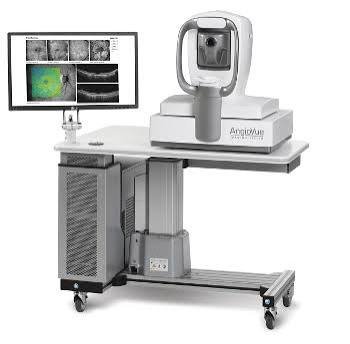 Humphrey Visual Field Analyser
Maps existing field loss and tracks progression over years
Humphrey Visual Field Analyser
Maps existing field loss and tracks progression over years
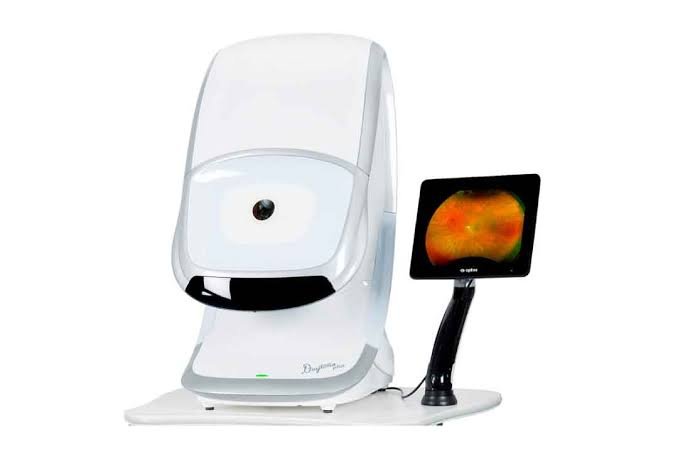 OCT optic disc and RNFL analysis
Measures nerve fibre thickness before field loss appears
OCT optic disc and RNFL analysis
Measures nerve fibre thickness before field loss appears
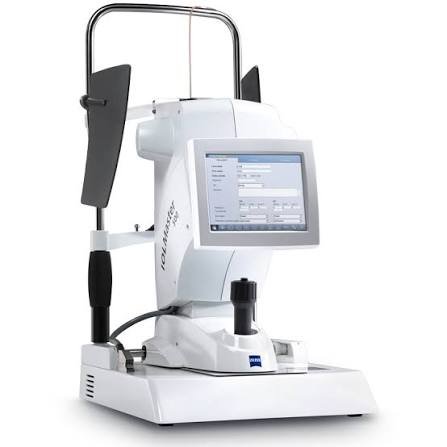 Goldmann applanation tonometer
Reference-standard intraocular pressure measurement
Goldmann applanation tonometer
Reference-standard intraocular pressure measurement
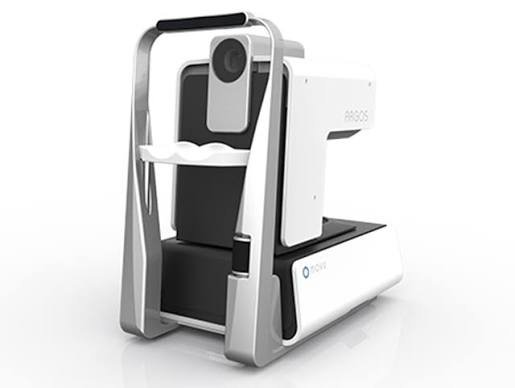 Gonioscopy lens assessment
Direct view of the drainage angle — open or closed
Gonioscopy lens assessment
Direct view of the drainage angle — open or closed
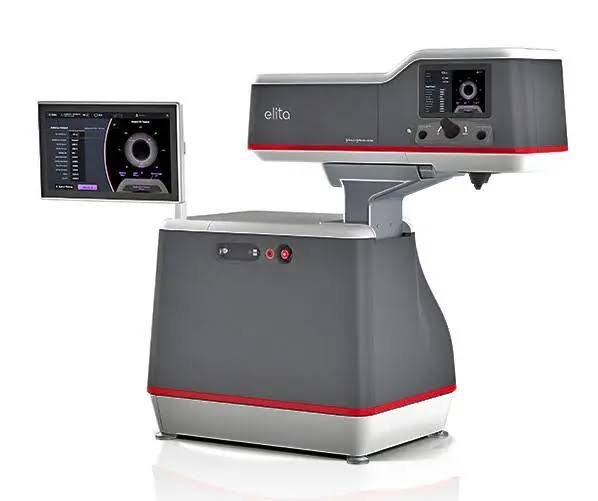 Nd:YAG and SLT lasers
Iridotomy for angle closure, trabeculoplasty for open angles
Nd:YAG and SLT lasers
Iridotomy for angle closure, trabeculoplasty for open angles
Step by step, from first visit to final review
No surprises. Here is exactly how this unfolds.
-
First evaluation
Vision, pressure on Goldmann, gonioscopy, pachymetry and a dilated look at both optic nerves. Budget around two hours — dilation takes time, and you should not drive yourself home afterwards.
-
Baseline scans and fields
OCT nerve fibre analysis and a Humphrey visual field, with disc photographs stored for comparison. These become the yardstick every future visit is measured against, so they are worth doing properly.
-
The diagnosis conversation
You see your own scans and are told plainly whether this is glaucoma, suspected glaucoma, or ocular hypertension that only needs watching. We set a target pressure for your eye and explain why that number.
-
Starting treatment
Usually drops or SLT laser. We show you how to instil a drop correctly, because most people have never been taught and most people do it wrong. First review at four to six weeks to check the pressure response.
-
If pressure will not settle
We change or add medication, consider laser, and discuss surgery if the target is still out of reach or damage is advancing. Surgery is scheduled with a full written estimate and an insurance pre-authorisation.
-
Lifelong monitoring
Pressure every three to six months, fields and OCT every six to twelve. The aim is simple: no further thinning, no further field loss. If the graphs stay flat, we are winning.
Why patients choose us for glaucoma
Diagnosis on evidence, not one reading
Gonioscopy, pachymetry, OCT and perimetry on every suspect. We will not put you on lifelong drops from a single air-puff number.
Your baseline is kept and compared
Disc photographs, OCT and field data from every visit, held together so progression is measured against your own eye rather than a memory.
34+ years of continuity
Glaucoma is a decades-long relationship. Since 1993 we have followed families through two generations of it, which is precisely the timescale this disease works on.
Laser and surgery under one roof
SLT, YAG iridotomy, trabeculectomy, Ahmed valve and MIGS at our NABH-accredited flagship, so escalation does not mean starting again elsewhere.
Emergency cover for acute closure
Sudden angle closure is treated the same day. Our emergency line is +91 40-4245 6666, and the flagship centre has 50 beds if admission is needed.
Consultants who handle glaucoma
The same consultants practise across our centres — you get the specialist, not the postcode.



Where glaucoma is available
Listed plainly so you do not travel to the wrong centre.
| Centre | Status | What is offered |
|---|---|---|
| Masab Tank, Hyderabad | Available | Trabeculectomy, Ahmed valve, MIGS, SLT and YAG laser |
| KPHB, Kukatpally | Available | Perimetry, OCT nerve analysis, medical and laser management |
| Warangal | Available | Pressure checks, perimetry, medical and laser management |
| Nalgonda | Available | Screening, pressure management and monitoring |
| Badvel, Kadapa | Available | Pressure screening and monitoring |
Glaucoma Treatment — your questions answered
Can glaucoma be cured, or only managed?
It is managed, not cured. Treatment lowers eye pressure to protect the optic nerve fibres you still have, and it does that very effectively for most people. What it cannot do is regrow fibres already lost, which is why the vision you walk in with is broadly the vision we are trying to keep.
Is glaucoma hereditary?
Risk runs strongly in families. Having a parent, sibling or child with glaucoma raises your own risk several-fold, and certain forms such as congenital and juvenile glaucoma have clearer genetic patterns. If you are diagnosed, tell your first-degree relatives to get screened from 40, or sooner if your disease appeared young.
Are glaucoma drops safe to use for years?
Yes, for most people. Modern prostaglandin drops are used once at night and are well tolerated long-term. Side effects do occur: redness, stinging, darkening of the eyelid skin, longer lashes, and with beta-blockers a slower pulse or breathlessness in people with asthma or heart disease. Tell us about them rather than stopping, because almost all of them have an alternative.
Laser or surgery — how do you decide?
By how far the pressure needs to fall and how much nerve damage is already present. SLT laser is quick, repeatable and carries little risk, but typically lowers pressure by a modest amount for one to five years. Trabeculectomy and valve implants lower pressure much further and last longer, at the cost of a real recovery period and risks including infection, very low pressure and the need for revision. We use the smallest intervention that reaches your target.
Can I have LASIK if I have glaucoma?
Usually not, and rarely without careful thought. LASIK thins the cornea, which makes every future pressure reading falsely low and harder to interpret in a disease monitored by pressure. The suction ring used during the procedure also raises pressure sharply for a short period. If you have established glaucoma we will generally advise against it and discuss other options such as an implantable lens.
Does cataract surgery affect glaucoma?
Often favourably. Removing a bulky natural lens deepens the drainage angle and modestly lowers pressure, which is particularly helpful in narrow-angle eyes. It also lets us combine a MIGS procedure in the same sitting for better control. It is not a treatment for glaucoma on its own, and eyes with advanced damage still need their drops afterwards.
How is glaucoma in children different from adults?
Very different. Congenital and developmental glaucoma stretches a child's softer eye, so the signs are a large-looking eye, a hazy cornea, constant watering and real discomfort in bright light rather than silent field loss. Drops are rarely enough — most children need surgery such as goniotomy, trabeculotomy or a drainage procedure, and they need it early to protect visual development.
What happens if glaucoma is left untreated?
Peripheral vision narrows steadily until only a central island remains, described by patients as looking through a tube. Bumping into door frames, missing steps and losing the ability to drive come well before reading vision goes. Untreated, that central island is eventually lost too, and the blindness that follows is permanent.
My pressure is normal but I was told I have glaucoma. How?
That is normal-tension glaucoma, and it is more common in India than the name suggests. The optic nerve in these eyes is damaged at pressures that sit within the statistically normal range, often alongside poor blood flow to the nerve. Treatment is the same in principle: lower the pressure further, below whatever level the nerve is currently tolerating.
Is glaucoma treatment covered by insurance?
Laser procedures and glaucoma surgery are covered by most health insurance policies and by CGHS, ECHS, Aarogyasri and Ayushman Bharat, subject to your policy terms. Long-term eye drops are an outpatient expense and generally are not covered. Our insurance desk handles pre-authorisation and gives you the out-of-pocket figure in writing before anything is scheduled.
Often looked at alongside this
Comprehensive Ophthalmology
A full diagnostic examination that checks the whole eye — not just what prescription you need.
Learn moreRetina Care
Diabetic retinopathy, macular degeneration and retinal detachment — screened early, treated with injections, laser or vitrectomy.
Learn moreCataract Surgery
Micro-incision and femtosecond laser-assisted cataract surgery, with the full range of monofocal, toric and multifocal lenses.
Learn morePaediatric Ophthalmology
Children rarely say their vision is poor — they adapt. We find what they will not tell you.
Learn moreFind out where your optic nerve stands
One evaluation gives you a baseline you can be measured against for the rest of your life. If your nerves are healthy, we will tell you that and send you home with a date to come back.