LASIK & Refractive Surgery
Freedom from glasses, once your cornea says it is safe
Most people who ask about LASIK are asking the wrong question first. The question is not which laser, it is whether your cornea is built for one. We answer that before we discuss anything else, and we say no when the answer is no.
What refractive surgery actually changes
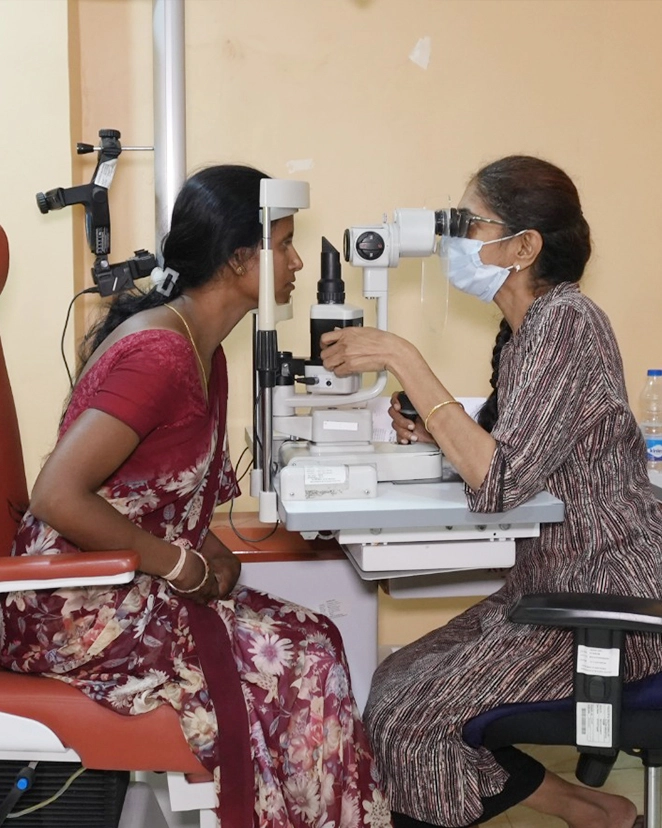
Your glasses do one job: they bend light so it lands exactly on your retina instead of in front of it or behind it. Refractive surgery does the same job from inside the eye, either by reshaping the cornea with a laser or by adding a lens implant. Nothing is being cured. The focusing error is simply being moved from a frame on your nose to the eye itself.
That is why the screening matters more than the technology. A laser can reshape almost any cornea, but only a cornea with enough thickness, a regular shape and a settled prescription stays stable afterwards. Getting that judgement right is the whole procedure. The twelve minutes on the laser bed are the easy part.
Not sure if this applies to you?
A single examination answers it definitively. If you do not need treatment, we will tell you that too — and when to come back.
What your prescription is actually describing
Every number on a spectacle prescription is one of these four. Which ones you have decides which procedures are even on the table.
Myopia (short sight)
The eye is slightly too long, so distance images focus in front of the retina. Boards blur, phones stay clear. It usually starts in school years and settles by the early twenties. This is the most commonly treated error and the one lasers correct best.
Hyperopia (long sight)
The eye is slightly too short and focus falls behind the retina. Young eyes compensate by straining, which is why it often shows up first as headaches or tired eyes rather than blur. Correctable, but the treatable range is narrower than for myopia.
Astigmatism
The cornea is shaped more like the back of a spoon than a football, so light focuses along two different lines instead of one point. Everything is slightly smeared at every distance, and lights streak at night. It is routinely corrected alongside myopia or hyperopia.
Presbyopia
After about 42 the natural lens stiffens and near focus goes, which is why menus get held further away. This is not a corneal problem, so standard LASIK does not fix it. Blended vision or a lens-based procedure is the honest answer here.
Who can have laser vision correction, and who cannot
This is the section that matters. Every item below is measured at your screening, and any one of them can rule out a laser procedure regardless of how much you want it.
- Corneal thicknessThe laser removes tissue in proportion to your prescription. We need enough cornea left behind after treatment to keep its shape under normal eye pressure for the rest of your life. Thin corneas or high prescriptions can breach that margin, and when they do, we do not treat.
- Corneal shape and topographyTomography maps the front and back surface and the thickness across the whole cornea. It picks up early keratoconus that vision testing completely misses. Lasering a cornea with a hidden weak spot can push it into progressive distortion, so any suspicious map is an automatic stop.
- A stable prescriptionWe want at least twelve months with no meaningful change, ideally more. If your number is still moving, treating it only resets the clock and the blur returns. This is why we rarely operate before the age of 20 even though 18 is technically permitted.
- Tear film and dry eyeLASIK temporarily reduces corneal nerve sensation and dryness gets worse before it gets better. Untreated dry eye before surgery becomes uncomfortable dry eye after it. We treat the tear film first and re-test, and for some people a flapless option or an implant is the better answer.
- Age 18 and aboveBelow 18 the eye is usually still changing. Above 45, laser on the cornea often disappoints because presbyopia arrives anyway, and a lens-based procedure gives a better long-term result.
- Pregnancy and breastfeedingHormonal shifts change corneal hydration and the tear film, which makes measurements unreliable and healing unpredictable. We ask you to wait until three to six months after you stop feeding. This is a delay, not a disqualification.
- Eye and systemic conditionsUncontrolled diabetes, active autoimmune disease, poorly controlled glaucoma, herpetic eye infections, significant cataract or retinal disease all change the calculation. Some rule laser out permanently, some only until the condition is settled. We will tell you which one applies to you.
A real proportion of people who come in asking for LASIK leave with a different plan, or with no procedure at all. That is not a failed consultation. A cornea that should not be lasered is far better identified on a screening machine than two years later in a clinic.
LASIK and SILK, and how they differ
Both use a femtosecond laser and both correct myopia and astigmatism. What separates them is whether a flap is made at all.
LASIK (femtosecond bladeless)
A femtosecond laser creates a thin hinged flap in the cornea, the flap is lifted, an excimer laser reshapes the tissue underneath to your exact prescription, and the flap is laid back down where it seals without stitches. It treats the widest range of prescriptions including hyperopia, gives quick comfort and sharp vision by the next morning, and has three decades of long-term data behind it. The trade-off is the flap: it never regains full tensile strength, so a hard blow to the eye years later carries a small risk of displacing it.
SILK (lenticule extraction)
No flap. The femtosecond laser shapes a thin contact-lens-shaped disc of tissue, a lenticule, inside the intact cornea, and the surgeon removes it through a small side opening of two to three millimetres. The corneal surface and its nerves are largely undisturbed, so dryness tends to be milder and shorter, and the cornea keeps more of its structural strength. It suits myopia and astigmatism. It cannot currently treat hyperopia, and enhancement afterwards is done differently.
Which one you should have
It is decided by your maps, not by the brochure. Contact sport, a job with impact risk, or a borderline tear film pushes towards SILK. Hyperopia, some mixed astigmatism patterns and certain corneal profiles push towards LASIK. If both are genuinely equal for your eye, we will say so and let you choose on cost and preference rather than inventing a reason to upsell one.
PRK, ICL and refractive lens exchange
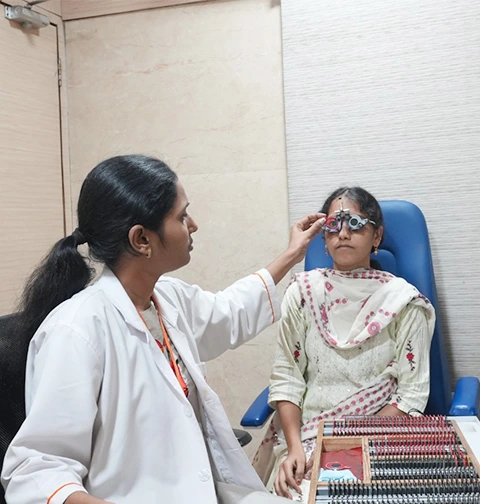
Being unsuitable for LASIK does not mean being stuck with glasses. It usually means a different route.
PRK / surface ablation
The thin surface layer of the cornea is removed and the excimer laser reshapes the tissue directly, with no flap at all. It is the oldest and most forgiving option for thin or irregular corneas, and for people in boxing, martial arts or the armed forces where an eye injury is a real prospect. The honest cost is comfort: expect four to seven days of grittiness and blur, with vision sharpening over four to six weeks.
ICL (implantable collamer lens)
A soft, biocompatible lens is folded through a tiny incision and positioned behind the iris, in front of your own natural lens. No corneal tissue is removed. It is the standard answer for high myopia beyond laser range, corneas too thin to laser, and eyes with significant dry eye. Sizing depends on precise measurement of the space inside the eye, which is why the workup is longer than for LASIK.
Refractive lens exchange (RLE)
The natural lens is replaced with an artificial intraocular lens, using exactly the same technique as cataract surgery. It makes sense after about 45, especially with high hyperopia or when the natural lens has already started to change. It solves distance and near together with a multifocal implant, and it removes any chance of needing cataract surgery later. It is intraocular surgery, so it carries more weight than a laser and is not offered to young eyes.
Comparing the five procedures
The same information we put on the screen during your counselling, with nothing softened.
| Procedure | How it works | Best for | Flap? | Recovery | Dry eye risk |
|---|---|---|---|---|---|
| LASIK | Femtosecond laser lifts a thin flap; excimer laser reshapes the bed beneath it | Myopia, astigmatism and hyperopia in eyes with adequate corneal thickness | Yes | Useful vision the next morning; driving in 24 to 48 hours | Moderate for 3 to 6 months |
| SILK | Femtosecond laser shapes a lenticule inside an intact cornea; removed through a 2 to 3 mm opening | Myopia and astigmatism, contact-sport players, borderline tear film | No | Most see well within 1 to 2 days | Lower and shorter than LASIK |
| PRK | Surface layer removed, excimer laser reshapes the cornea directly, surface regrows over it | Thin corneas, irregular surfaces, high-impact jobs and sport | No | 4 to 7 days of discomfort; vision settles over 4 to 6 weeks | Low once fully healed |
| ICL | A soft collamer lens is placed behind the iris; no corneal tissue is removed | High myopia beyond laser range, thin corneas, significant dry eye | No | Useful vision within a day; drops for about a month | Minimal |
| RLE | The natural lens is replaced with an intraocular lens, as in cataract surgery | Age 45 and above, high hyperopia, early natural lens changes | No | 1 to 3 days for routine activity; refraction settles by week 4 | Minimal |
Refractive surgery is elective, so health insurance and government schemes almost never cover it. We give you a written, all-inclusive figure covering the workup, the procedure and every follow-up before you commit, so nothing appears later.
What changes after a successful procedure
Stated plainly, without promising anyone perfect vision for life.
Vision that is simply there
Waking up and reading the clock, swimming without hunting for a towel, riding through rain. The gain most people describe is not sharpness, it is the end of a small daily negotiation with an object.
Predictable, settled results
For prescriptions inside the treatable range, the large majority reach 6/6 or very close to it, and the result holds steady once healing is complete. Where a small residual number remains, an enhancement is usually possible after the eye stabilises.
A short interruption
For LASIK and SILK, one day off and light screen use from day two is realistic for most desk jobs. PRK asks for a week. Nobody needs hospital admission for any of them.
No more contact lens risk
Daily lens wear carries a small but genuine annual risk of corneal infection and ulcers, and that risk compounds over decades of wear. Removing lenses from your routine removes that entirely.
Sport, shift work and uniforms
Swimming, contact sport, defence and police entrance standards, long theatre lists behind a mask, night driving without smudged lenses. These are the reasons people actually give us.
Costs that stop repeating
Lenses, solutions and a new pair of glasses every couple of years add up over a working life. It is a fair long-term argument, but it takes years to balance out, so treat it as a bonus rather than the reason to proceed.
The right time, and the wrong time
Refractive surgery is elective, which means timing is entirely yours to choose. These are the things that make a given moment right or wrong.
Wait until the number stops moving
Treating a prescription that is still drifting means treating it twice. Twelve months of stability is the minimum we accept, and for teenagers we usually prefer to see two stable annual readings.
Fix the dry eye first, not after
Every laser procedure makes dryness worse for a period. Starting from an already unhappy tear film is the single most common cause of a miserable first three months. A few weeks of treatment beforehand changes the whole experience.
Screening catches more than eligibility
The workup routinely picks up early keratoconus, glaucoma suspects and peripheral retinal thinning in high myopes. Some of those findings need attention regardless of whether you ever have refractive surgery.
Pick a quiet fortnight
Plan around dusty travel, a wedding, swimming holidays and gym routines. Two weeks of ordinary life makes the drops schedule and the protective eyewear far easier to stick to.
After 45, think lens, not laser
Lasering the cornea in a mid-forties eye can leave you needing reading glasses within a couple of years and facing cataract surgery later anyway. A lens-based plan often serves that decade far better.
When to come in
| Your situation | What we suggest |
|---|---|
| Age 18–20, number still changing | Annual refraction; revisit surgery once stable for a year |
| Age 20–40, stable prescription | Book a full refractive workup whenever you are ready |
| Wearing soft contact lenses | Stop them 5 to 7 days before the screening, not on the day |
| Wearing rigid or scleral lenses | Stop 2 to 3 weeks before, so the cornea returns to its own shape |
| Known dry eye or long screen hours | Tear film assessment and treatment first, re-test after 4 to 6 weeks |
| Pregnant or breastfeeding | Wait 3 to 6 months after feeding stops before measurements |
| Myopia above -6 D | Dilated retinal check yearly, whether or not you have surgery |
| After any refractive procedure | Day 1, week 1, month 1, month 3, then annually |
The equipment behind the diagnosis
A recommendation is only as good as the measurement it rests on. These are the machines your findings come from.
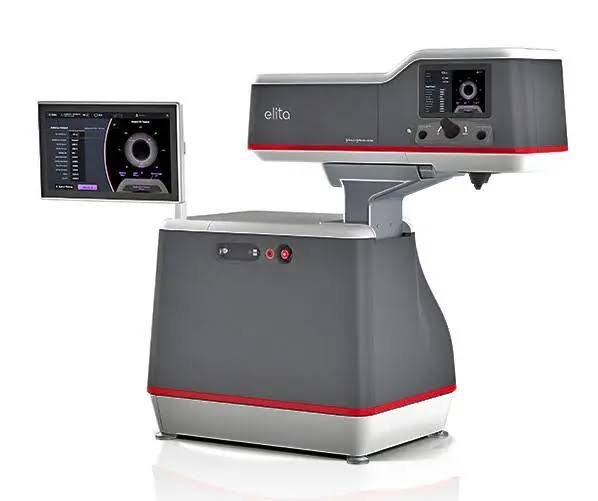 ELITA Femtosecond Laser
Flap creation for LASIK and lenticule shaping for SILK
ELITA Femtosecond Laser
Flap creation for LASIK and lenticule shaping for SILK
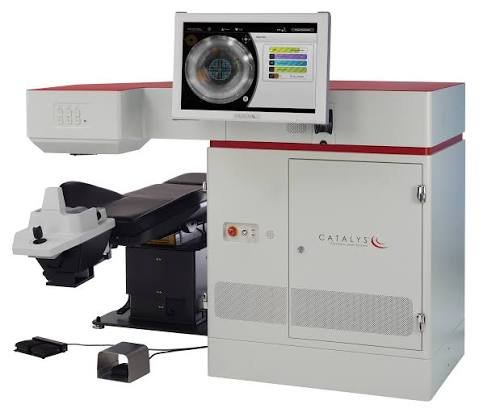 Excimer Laser Platform
Reshapes the cornea in LASIK and PRK, with eye tracking
Excimer Laser Platform
Reshapes the cornea in LASIK and PRK, with eye tracking
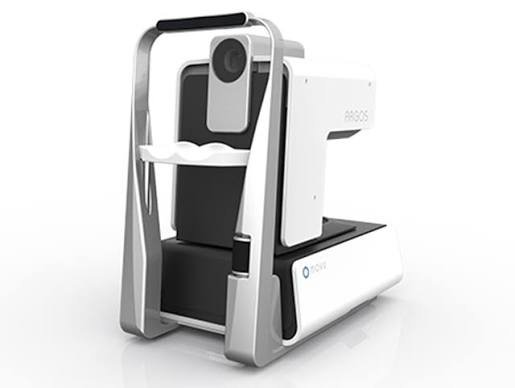 Corneal Topography & Tomography
Maps curvature and thickness to rule out early keratoconus
Corneal Topography & Tomography
Maps curvature and thickness to rule out early keratoconus
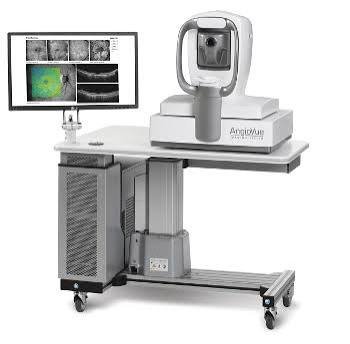 Anterior Segment OCT
Cross-sections the cornea and measures ICL vault space
Anterior Segment OCT
Cross-sections the cornea and measures ICL vault space
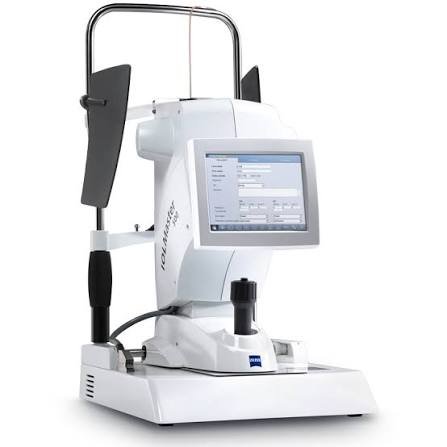 Wavefront Aberrometry
Measures higher-order aberrations for customised treatment
Wavefront Aberrometry
Measures higher-order aberrations for customised treatment
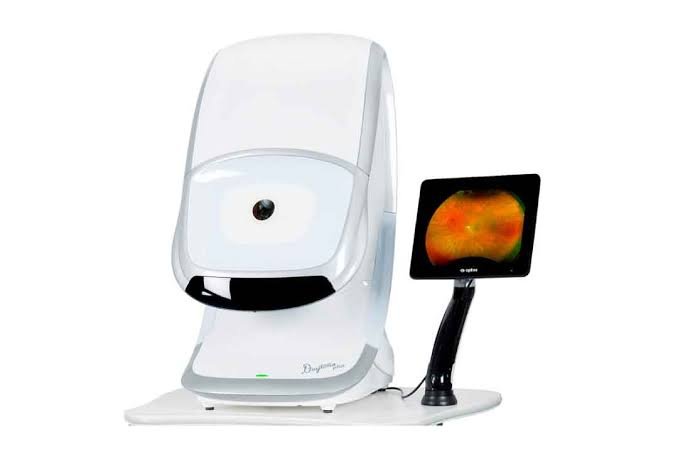 Optos Ultra-Widefield Imaging
Checks the peripheral retina before treating high myopia
Optos Ultra-Widefield Imaging
Checks the peripheral retina before treating high myopia
Step by step, from first visit to final review
No surprises. Here is exactly how this unfolds.
-
Screening consultation
Stop soft contact lenses five to seven days before, and rigid lenses two to three weeks before, or the measurements will describe a cornea moulded by the lens rather than your own. Vision, refraction and a slit-lamp examination establish where you stand.
-
The full refractive workup
Topography and tomography, corneal thickness, pupil size in the dark, wavefront aberrometry, tear film assessment, eye pressure, and a dilated retinal examination. It takes two to three hours, and you will not be able to drive afterwards because of dilation.
-
The verdict and the options
You see your own maps on the screen and hear which procedures your cornea supports, which it does not, and why. If nothing suits you, we say so. If more than one suits you, we set out the trade-offs and the costs of each, in writing.
-
Procedure day
Anaesthetic drops only, no injection, no general anaesthetic. Ten to fifteen minutes in theatre for both eyes, with the laser itself running for well under a minute per eye. You will be asked to stare at a fixation light. You go home the same hour.
-
The first 24 hours
Expect watering, light sensitivity and a gritty feeling for four to six hours after LASIK or SILK, longer after PRK. Sleep it off, wear the protective shields, and do not rub the eye under any circumstance. Most people see usefully by the next morning.
-
Follow-up and settling
Reviews at day one, week one, month one and month three. Drops taper over two to four weeks, lubricants continue longer. No swimming for four weeks, no contact sport for a month after SILK or PRK and longer after LASIK.
Why patients choose us for refractive / LASIK
Screening decides, not sales
Every recommendation follows a full tomography and tear film workup. Nobody is quoted a procedure before their own maps are on the screen in front of them.
We turn people down
If your cornea is thin, irregular or still changing, you will be told no and given the reason, along with what you can safely have instead.
34+ years, 1,35,000+ surgeries
MediVision has been operating since 1993. Refractive work sits inside a hospital that does the full range of corneal and lens surgery, not a standalone laser room.
Corneal specialists on the same floor
The people who treat keratoconus and perform corneal transplants are the ones reading your topography. That matters most in the borderline cases.
One written, all-inclusive price
Workup, procedure, medication and every follow-up quoted upfront. Refractive surgery is not covered by insurance, so the figure you are given is the figure you pay.
Consultants who handle refractive / LASIK
The same consultants practise across our centres — you get the specialist, not the postcode.

Where refractive / LASIK is available
Listed plainly so you do not travel to the wrong centre.
| Centre | Status | What is offered |
|---|---|---|
| Masab Tank, Hyderabad | Available | LASIK, PRK, ICL and refractive lens exchange |
| KPHB, Kukatpally | Available | LASIK, PRK and ICL evaluation |
| Warangal | Available | LASIK and PRK evaluation and treatment |
| Nalgonda | Available | LASIK evaluation and treatment |
| Badvel, Kadapa | Referred | LASIK and refractive surgery are performed at our Hyderabad centres |
LASIK & Refractive Surgery — your questions answered
Is LASIK permanent?
The corneal reshaping is permanent and does not wear off. What can change is your eye: from about 42 onwards the natural lens stiffens and reading glasses become necessary regardless of any laser treatment, and a small number of people develop a slight residual number over many years. Roughly one person in twenty needs an enhancement at some point.
Does it hurt?
Not during the procedure. Anaesthetic drops numb the surface completely and most people report pressure and odd lighting rather than pain. Afterwards, LASIK and SILK give four to six hours of watering and grittiness that settles with sleep. PRK is genuinely uncomfortable for three to five days, which is why we discuss it honestly before you choose it.
LASIK or SILK, which is better?
Neither is better in general; they are better for different eyes. SILK avoids a flap, so it preserves more corneal strength and tends to cause less dryness, making it a strong choice for contact sport and borderline tear films. LASIK treats a wider range including hyperopia and has far longer published follow-up. Your tomography usually makes the choice obvious.
How do I know if I am suitable?
Only a full workup answers this: corneal thickness, front and back surface tomography, pupil size, tear film, eye pressure and a dilated retinal check. A stable prescription for at least a year and an age of 18 or above are the minimum entry conditions. A significant number of people are found unsuitable for laser and are offered an ICL or nothing at all.
Can astigmatism be corrected?
Yes, routinely. LASIK, SILK and PRK all treat astigmatism alongside myopia, and toric ICLs handle it for eyes that cannot be lasered. Very high or irregular astigmatism is a different matter, because irregularity often signals keratoconus, and that needs stabilising with cross-linking rather than reshaping with a laser.
What is the aftercare like?
Antibiotic and steroid drops for two to four weeks on a tapering schedule, lubricating drops for two to three months, and protective shields at night for the first week. No eye rubbing, no dusty environments and no eye make-up for two weeks. Reviews at day one, week one, month one and month three.
Is an ICL reversible?
Yes, and that is one of its real advantages. No corneal tissue is removed, and the lens can be explanted or exchanged by a surgeon if your prescription changes substantially or if cataract surgery is needed later. Reversible does not mean trivial, though: it is intraocular surgery both going in and coming out.
When can I get back to sport and swimming?
Walking and desk work from day two. Gym and running after one week. No swimming pools, sea water or steam for four weeks because of infection risk. Contact sport such as cricket, football, boxing or martial arts waits a month after SILK or PRK, and we advise protective eyewear indefinitely after LASIK because the flap never regains full strength.
Will I still need reading glasses later?
Almost certainly, yes, from your mid-forties. Presbyopia is the natural lens stiffening with age, and reshaping the cornea does nothing about it. Some people opt for blended vision, where one eye is set slightly for near, and that suits about two-thirds of those who try it. We let you test it with contact lenses first.
Is refractive surgery covered by insurance?
Generally not. Health insurers and government schemes treat it as an elective procedure, with rare exceptions for very high prescriptions or medical necessity documented in advance. We give you a single written estimate covering the workup, the procedure, medication and all follow-up visits so that there is no drip of extra charges later.
Often looked at alongside this
SILK Laser Vision Correction
Flapless laser vision correction on the ELITA platform — no blade, no flap, minimal dry eye.
Learn moreCornea & Dry Eye
Keratoconus cross-linking, corneal transplantation and a dedicated dry-eye clinic with IPL therapy.
Learn moreCataract Surgery
Micro-incision and femtosecond laser-assisted cataract surgery, with the full range of monofocal, toric and multifocal lenses.
Learn moreComprehensive Ophthalmology
A full diagnostic examination that checks the whole eye — not just what prescription you need.
Learn moreFind out whether your eyes are built for this
One full workup gives you a definitive yes, a no with the reason, or a different route that suits your cornea better. All three answers are worth having.