
The single biggest influence on how well you see after cataract surgery is not the machine in the theatre. It is the accuracy of the measurements taken before you enter it, and the judgement of the person who interprets them. Yet almost every comparison patients make between hospitals is about equipment brands and package prices. Those are the easiest things to advertise, which is exactly why they dominate the conversation.
The measurement decides more than the surgery
Removing a cataract is a well-standardised operation. Any competent, regularly operating surgeon does it safely. What varies between one result and another is the power of the lens that goes in, and that power is a calculation.
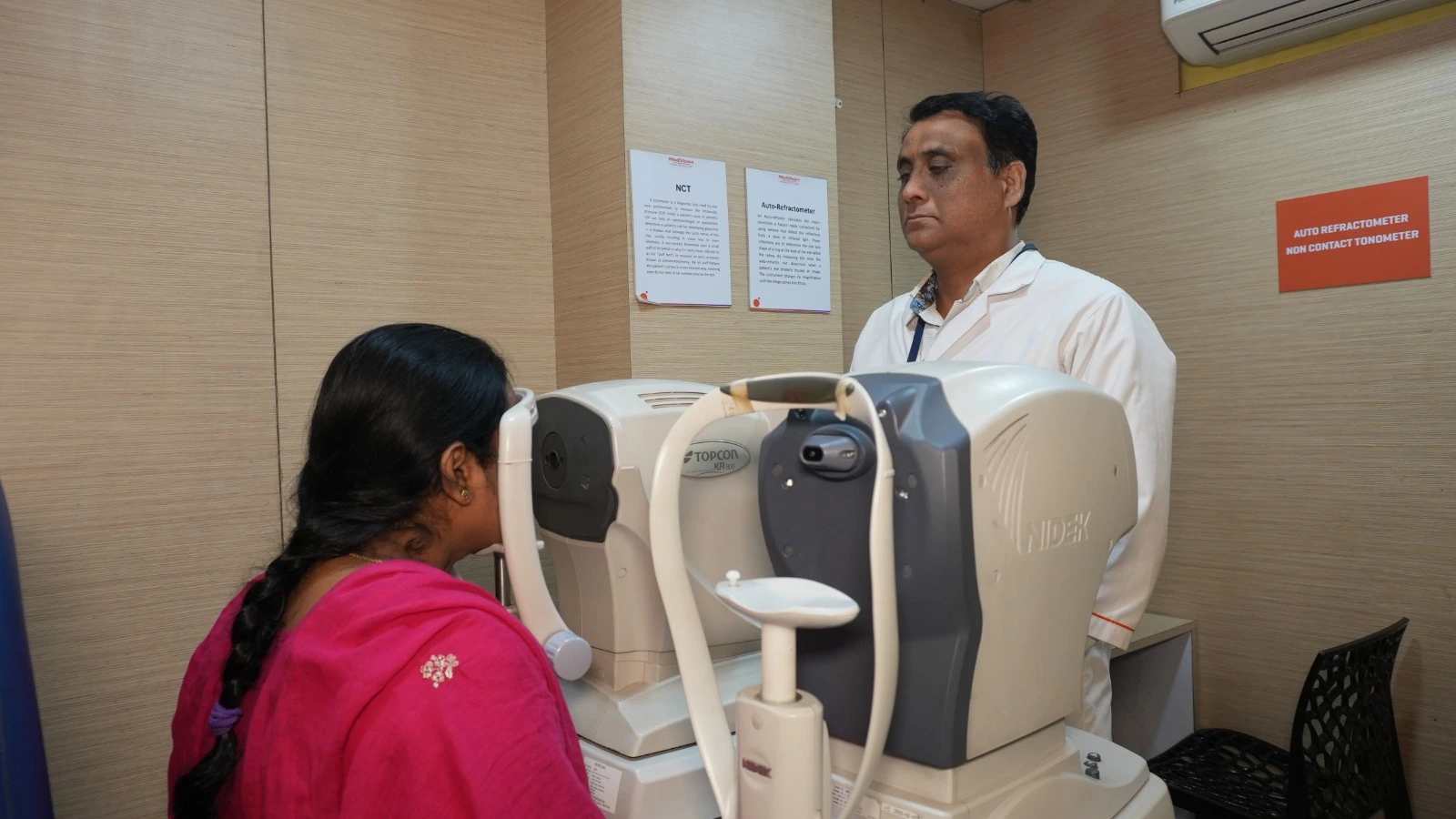
It depends on the length of your eye measured to a fraction of a millimetre, the curvature of your cornea, the depth of the front chamber, and a formula chosen to suit that particular eye. Optical biometry, on an IOLMaster 700 or an ARGOS, is far more repeatable than the older ultrasound method where a probe touches the eye. In a dense cataract that scatters light, the ARGOS is often the one that gets a reading at all.
Small errors here are what leave someone needing an unexpected minus one glass afterwards. They are also invisible to the patient, which is why nobody shops for them.
Some eyes are harder to calculate than others: very long short-sighted eyes, very short eyes, and any eye that has had LASIK or a similar laser correction in the past. If that is you, ask specifically how the power will be calculated, because the standard formula gives the wrong answer in a post-LASIK eye and the correction for it is not automatic.
What genuinely changes the outcome
- How often the surgeon operates. Regular volume keeps hands steady and keeps rare complications familiar. A surgeon who does cataract work every week handles a torn capsule differently from one who meets it twice a year.
- Whether the whole eye was examined, not just the lens. A cataract can be removed perfectly and the vision still disappoint, because the macula or the optic nerve was already damaged. An OCT scan and a dilated retinal check before surgery tell you what to expect. Being warned in advance is not bad news, it is honest planning.
- Who is available when something goes wrong. Most problems after cataract surgery appear in the first week: pressure rise, inflammation, rarely infection. What matters is whether you can reach someone the same day. Our Masab Tank centre runs 24x7 emergency cover for exactly this.
- Whether there is a retina and glaucoma team in the same building. Diabetic eyes and glaucoma eyes need the cataract plan coordinated with the rest of their care, not handed off across town.
- Sterility and theatre discipline. Unglamorous, unmeasurable from outside, and the reason NABH accreditation is worth checking. It audits the processes that prevent infection rather than the branding.
What matters less than the marketing suggests
The laser. Femtosecond laser-assisted cataract surgery does some steps of the operation with a laser instead of by hand. It is genuinely useful in specific eyes: a very hard lens, a weak zonule, a previous corneal transplant, or when precise centration is needed for a premium lens. In a routine cataract, published comparisons have not shown that patients see better a few months later. It is a reasonable option, not a requirement, and it adds meaningfully to the bill.
Bladeless, stitchless, painless. These describe standard phacoemulsification, which is what nearly every hospital in Hyderabad has been doing for years. They are not a differentiator.
The most expensive lens. A premium lens in an eye that is not suited to it produces a worse result than a standard lens would have. More on that below.
Questions worth asking before you book
- What did my biometry show, and which formula are you using for my eye?
- What target are we aiming for, distance or near, and how much glasses use should I expect?
- Has the macula been imaged? Is there anything there that limits what surgery can give me?
- Who operates, and who sees me on day one and day seven?
- What is included in the quoted price and what is billed separately?
- If a complication occurs during surgery, what happens next?
A surgeon who answers with your numbers is thinking about your eye. One who answers by naming equipment is answering a different question.
A straight word about price
In Hyderabad, cataract surgery with a standard monofocal lens in a private hospital typically falls in the range of roughly Rs 25,000 to Rs 50,000 per eye. Toric lenses for astigmatism, extended-depth-of-focus and trifocal lenses run higher, often Rs 60,000 to well over Rs 1,00,000 per eye. Adding femtosecond laser increases it further. What moves the number is the lens you choose, whether laser assistance is used, and the hospital's own overheads, not the skill of the surgery itself.
Most health insurance policies cover cataract surgery after the waiting period, usually up to a sub-limit, with the difference for a premium lens paid by you. Government schemes cover the procedure with a standard lens at empanelled centres, including our Badvel centre. A hospital that will not put the full breakdown in writing before surgery is telling you something.
If you are weighing up options, bring your previous prescriptions and any old reports to a dilated consultation, and ask for the biometry and the reasoning to be explained to you. You can read more on our cataract page or see the surgeons who would be assessing you on the doctors page.