If you have been buying lubricating drops for months and your eyes still burn by the evening, they are not failing because you picked the wrong brand. They are failing because in most people dry eye is not a shortage of water. It is a shortage of oil, and topping up the watery part of a tear film that evaporates too fast is like filling a bucket with a hole in it.
A tear is three layers, not one
The film covering your eye has a mucin layer that helps it stick to the surface, a watery layer produced by the lacrimal gland, and on top of that a very thin oily layer. The oil comes from about twenty-five to thirty meibomian glands lined up inside each eyelid margin, just behind the lashes. Its only job is to stop the water underneath from evaporating.
When those glands are blocked, or their oil has thickened to the consistency of toothpaste, the water evaporates within seconds of a blink instead of lasting until the next one. The surface dries in patches, the nerves in the cornea fire, and you get the familiar set of complaints: burning by afternoon, grittiness, a stringy discharge in the morning, eyes that feel tired long before you do, and, confusingly, watering. Reflex watering is a very common symptom of dry eye. Patients often tell us their eyes cannot possibly be dry because they keep running.
The majority of what we see in clinic is this evaporative type, or a mix of evaporative and true tear deficiency. Pure deficiency, where the lacrimal gland genuinely underproduces, is the smaller group.
Why the drops feel good for twenty minutes
A plain lubricating drop adds volume to the watery layer. With no functioning oil layer above it, that volume is gone in minutes. You get real but short relief, so you use the drop more often, and after some weeks you are instilling it six or eight times a day.
At that frequency the preservative starts to matter. Benzalkonium chloride, the commonest preservative in eye drops, is mildly toxic to surface cells with repeated exposure. Beyond roughly four applications a day, preservative-free vials are worth the extra cost.
One more thing worth saying plainly: stop using redness-relief drops. The ones that clear the white of the eye within a minute work by constricting blood vessels. They treat the appearance and nothing else, and when they wear off the redness returns worse than before. People stay dependent on them for years while the lid disease underneath is never touched.
What actually blocks the glands
It helps to know what you are dealing with, because several of the causes are things you control.
- Long hours at a screen. Blink rate falls by roughly half at a monitor, and many of the blinks that remain are incomplete, so the lower glands are never squeezed out.
- Chronic lid margin inflammation, including blepharitis, rosacea, and Demodex mites at the lash roots.
- Age and hormonal change. Gland function declines steadily after the forties, and more sharply after menopause.
- Medication. Antihistamines, several antidepressants, isotretinoin for acne, some blood pressure tablets and long-term preserved glaucoma drops all degrade tear quality.
- Moving air. Ceiling fans, car vents and office air conditioning aimed at the face are underrated culprits, particularly through a Hyderabad summer.
- Contact lens wear, especially long daily hours in an air-conditioned office.
What helps, in the order that makes sense
The oil layer is restored by treating the lids, not the eyeball. That is the whole shift in thinking.
- Real heat, properly applied. Meibomian oil softens at around 40 degrees. A wet cloth cools within a minute and does nothing useful. A reusable heat mask held against closed lids for eight to ten minutes, once daily, is the version that works.
- Massage and clean immediately after. Sweep the warmed oil out with a gentle roll of the fingertip towards the lash line, then wipe along the lid margin with a lid-cleaning wipe or dilute baby shampoo on cotton.
- Deliberate full blinks. A few times an hour, close the lids fully and squeeze gently for two seconds. It sounds trivial. It is the cheapest part of the treatment and one of the more effective.
- Change the drop, not just the frequency. A lipid-containing preservative-free drop suits an evaporative pattern far better than a plain saline-style tear. A gel or ointment at bedtime carries people through the night, when most of the surface damage happens.
- Then, if needed, medical treatment. Short courses of anti-inflammatory drops, low-dose oral doxycycline or azithromycin for stubborn lid disease, cyclosporine drops for chronic inflammation, and punctal plugs in the smaller group whose problem really is tear deficiency.
Two honest expectations. First, this takes six to twelve weeks before you can judge it, because the glands have to recover, and people who abandon the routine at three weeks conclude that nothing works. Second, dry eye is usually controlled rather than cured. Stop the lid routine entirely and symptoms drift back over a few months.
When the problem is not dry eye at all
Several conditions produce nearly identical complaints and need completely different treatment.
- Allergic eye disease, where itching dominates. Itching is the allergy symptom. Burning is the dry eye symptom. The distinction is worth making before you buy anything.
- Lids that do not close fully during sleep, which dries a band across the lower cornea and explains eyes that are at their worst on waking. That is an eyelid problem, not a tear problem.
- Thyroid eye disease, where the eyes sit forward and more of the surface is exposed between blinks.
- Corneal surface disease, which needs assessment on the cornea service rather than more lubricant.
- Sjogren syndrome, suggested by a dry mouth and joint pain alongside dry eyes, which needs a rheumatologist involved as well.
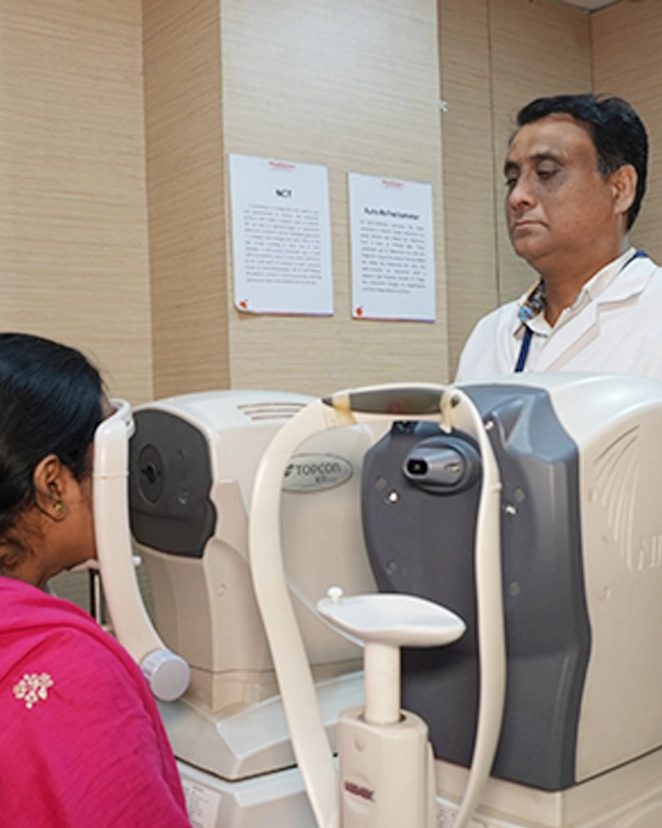
Telling these apart takes a slit lamp, not a guess. We time how long the tear film lasts before it breaks up, stain the surface to see where it is damaged, press gently on the lid to see what comes out of the glands, and measure tear volume where the history points that way. That examination usually takes ten minutes and changes the plan more often than not.
If drops have been your entire treatment so far, an assessment aimed specifically at the lids is a reasonable next step. Our KPHB centre runs until 8:30pm, which suits people coming after office, and the tests form part of a standard comprehensive eye check. Bring the drops you are currently using, including the ones you bought without a prescription.