Patients usually arrive having already picked a procedure from something they read. That is a reasonable place to start, but it is the wrong end of the process. All three techniques remove tissue from the same layer of the cornea and correct the same range of prescriptions. What differs is how the surgeon reaches that layer, and which method your particular cornea can tolerate. The scans decide far more than the brochure does.
What each one actually does
PRK
The oldest of the three and still in regular use. The surface layer of the cornea, the epithelium, is removed. The excimer laser reshapes the exposed surface directly. The epithelium then grows back over three to five days, protected by a bandage contact lens.
No flap is made and no deeper tissue is cut, so the cornea keeps more of its structural strength. The cost is comfort: days three and four are genuinely uncomfortable, and clear vision takes one to four weeks rather than one day.
LASIK
A thin flap is created in the front of the cornea, either with a femtosecond laser or a mechanical blade. The flap is lifted, the excimer laser reshapes the tissue underneath, and the flap is laid back down where it seals by suction without stitches.
Because the surface layer is preserved, recovery is fast and nearly painless. Most people see well the next morning. The trade-off is the flap itself: it is a permanent plane in the cornea, it removes a little structural strength, and it cuts more corneal nerves than the alternatives, which is why dry eye tends to be more pronounced after LASIK.
SMILE and SILK
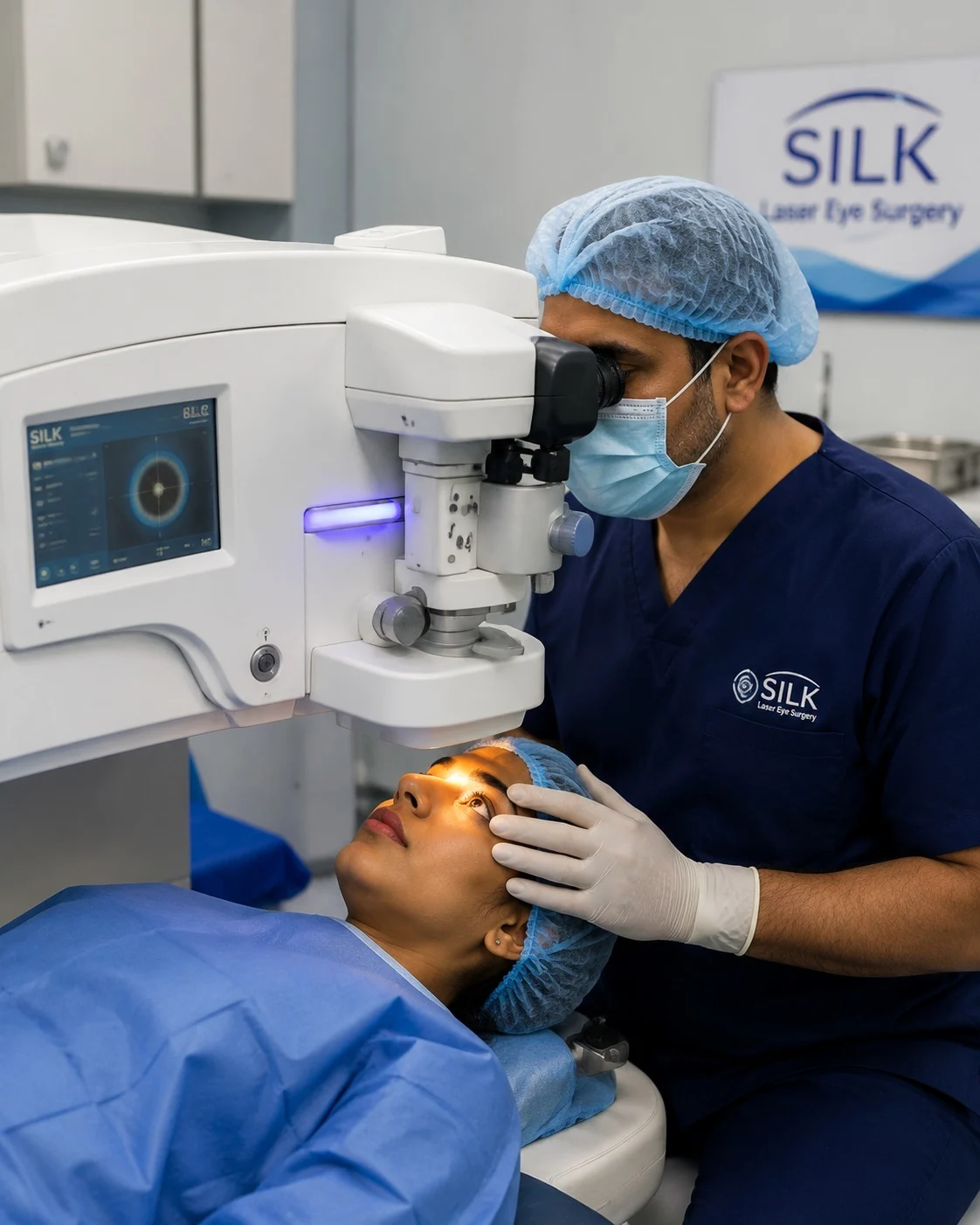
Here a femtosecond laser shapes a thin lens-shaped disc of tissue inside the cornea, and the surgeon removes it through a small side incision of two to four millimetres. There is no flap. The surface stays almost entirely intact.
SMILE has been performed for over a decade. SILK is a newer flapless technique on the ELITA platform, using lower energy pulses placed closer together, which makes the disc smoother and easier to separate. We offer SILK at Masab Tank and KPHB. Both share the same logic: keep the surface intact, cut fewer nerves, avoid a flap altogether.
How the three compare on the things patients care about
- Comfort in the first week: LASIK and SMILE or SILK are comfortable within hours. PRK is sore for three or four days.
- Speed of visual recovery: LASIK is fastest, usually next morning. SMILE and SILK take a day or two longer to sharpen. PRK takes one to four weeks and can drift for a month or two after.
- Dry eye: LASIK most, flapless procedures noticeably less, PRK in between and usually short-lived.
- Structural strength retained: PRK and the flapless procedures preserve more than LASIK does.
- Astigmatism: all three handle it, though LASIK and PRK have the longer track record with high or unusual astigmatism.
- Long-term result: broadly similar. At one year, patients from all three groups end up in much the same place. The differences are in the journey, not the destination.
- Cost: PRK is generally the least expensive, standard LASIK next, and the flapless procedures the most.
What actually decides it in the clinic
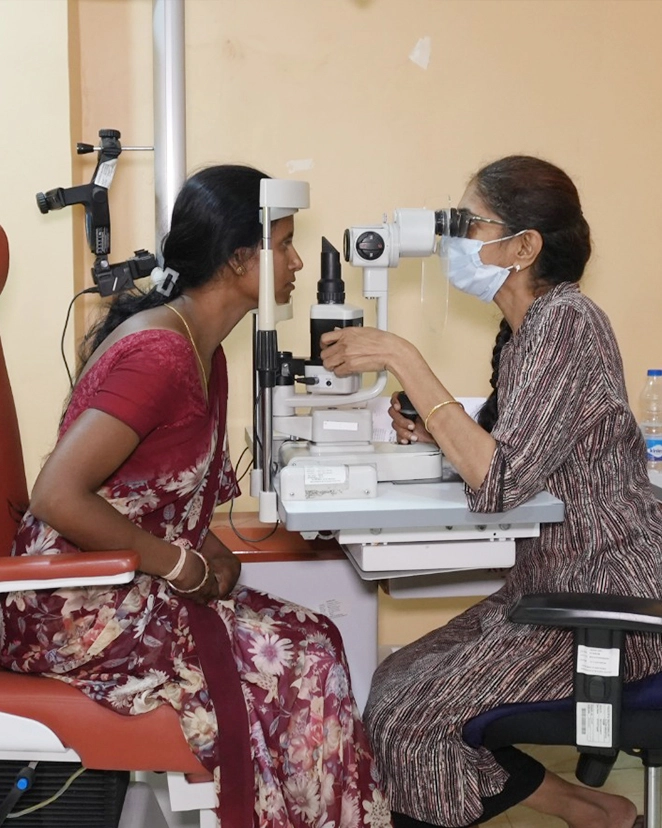
The consultation measures corneal thickness, corneal shape front and back, pupil size in the dark, tear film quality and your exact prescription. Those numbers narrow the options quickly, often to one.
- A thin cornea rules out LASIK, because after the flap and the tissue removal there may not be enough left to remain stable. PRK becomes the usual choice.
- An irregular corneal shape, even mildly suspicious, rules out LASIK and often rules out laser correction entirely. This is the finding that matters most, and it is the reason a proper scan is not optional.
- Significant dry eye pushes us away from LASIK and towards a flapless technique, after treating the dryness first.
- Long-sightedness is currently treated with LASIK or PRK. The flapless procedures are used mainly for myopia and myopic astigmatism.
- A job or sport with a real risk of a blow to the eye, such as boxing, kabaddi, the armed forces or the police, argues against a flap. PRK or a flapless procedure is safer over a lifetime.
- Very high prescriptions, beyond roughly minus 8 to minus 10 depending on corneal thickness, may be better served by an implantable lens rather than laser at all.
If you are told you are not a candidate, that is not a sales tactic. Roughly one in five people who come in for laser correction turns out to be unsuitable, most often because of corneal shape or thickness. Operating on a cornea that cannot take it risks ectasia, a progressive weakening that is far harder to live with than glasses.
The questions that matter more than the acronym
Two patients with identical prescriptions can need different procedures, and a surgeon who recommends the same one to everybody is not reading the scans. When you sit down for the discussion, ask:
- What did my corneal thickness and topography show?
- How much tissue will be left after treatment, and how does that compare with the safe minimum?
- Why this procedure for me specifically, rather than the other two?
- What is my realistic result, and what happens if I am undercorrected?
A good answer refers to your numbers. A weak answer refers to the technology.
A word on presbyopia
None of these procedures stop the near-focus decline that begins in the forties. If you are 43 and short-sighted, you currently read comfortably by taking your glasses off. Correct your distance vision fully and you will need reading glasses for the first time. That is not a complication, it is arithmetic, but it takes some people by surprise. There are ways to plan around it, including leaving one eye slightly short-sighted, and it is worth discussing before rather than after.
The sensible next step is a full refractive workup: about ninety minutes, dilating drops, and a clear answer at the end about which of the three suits your eyes and whether any of them do. You can read more on our refractive surgery page, see who would be assessing you on the doctors page, or book a slot at our KPHB centre or Masab Tank, where all three procedures are available.