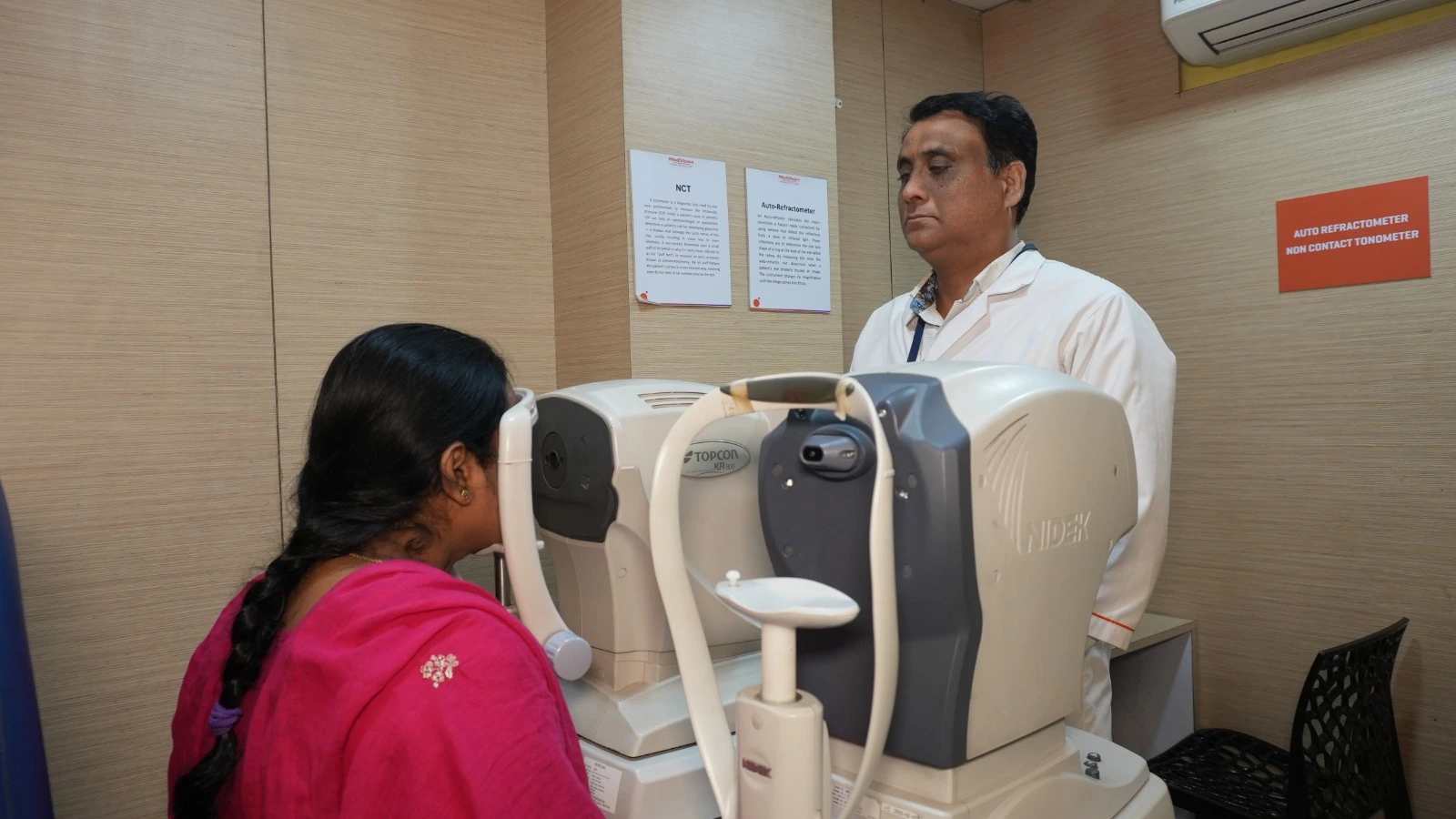
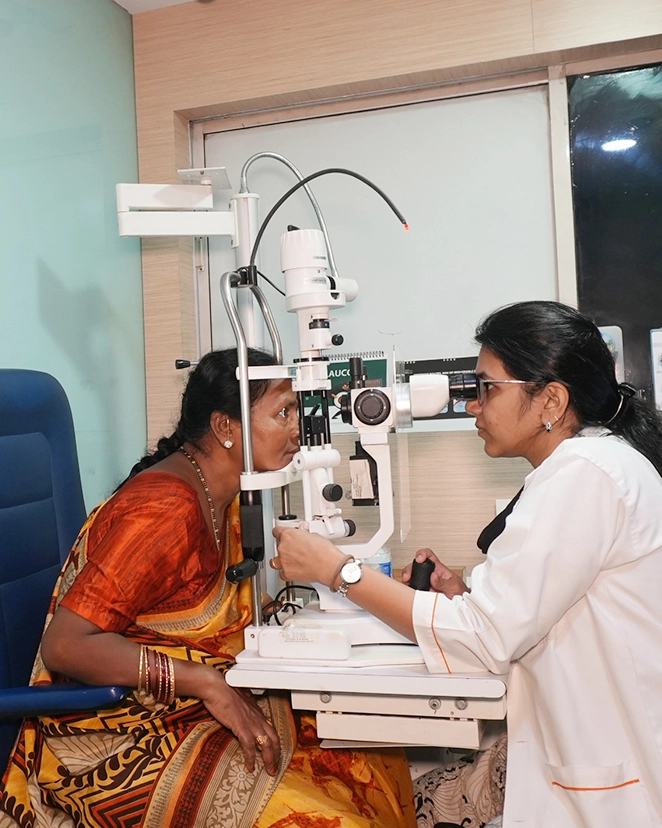
The operation itself is short. Plan for three to four hours in the hospital, and for the eye to feel odd rather than sore for the rest of the day. Most of that time is spent waiting for drops to work. Knowing the sequence in advance removes most of the anxiety, so here it is, in order.
The week before
You will have had biometry, the measurements that decide your lens power, and a dilated examination of the retina. If you wear contact lenses, you are asked to stop them for a period beforehand because they change the shape of the cornea and distort the measurements.
Blood pressure and sugar are checked. Diabetes does not prevent surgery, but very high sugars on the day are a reason to postpone. Blood thinners such as aspirin or clopidogrel are usually continued, since a modern cataract wound does not bleed meaningfully. Do not stop any heart or blood pressure medicine on your own. Tell us about tamsulosin or similar prostate medicines even if you stopped them years ago, because they affect how the pupil behaves during surgery and the surgeon plans differently when he knows.
Antibiotic drops usually start a day or two before. Arrange for someone to come with you and to take you home. You will not be allowed to drive afterwards.
The morning
Eat a normal light meal unless you have been told otherwise. This is done under drops, not general anaesthesia, so starving yourself is unnecessary and makes diabetic patients unwell. Take your usual tablets with a little water. Skip eye make-up, face cream and perfume.
Once admitted, dilating drops go in every ten to fifteen minutes for about an hour, along with a numbing drop. This is the slow part. The pupil has to open wide and stay open, and in some eyes it is stubborn. Bring someone to talk to and expect the waiting area, not the theatre, to take most of your morning.
Vision goes bright and blurred as the pupil dilates. That is expected and it settles over the following few hours.
Inside the theatre
You lie flat on a bed. The skin around the eye is cleaned, and a thin sterile sheet is placed over the face with an opening for the eye. Many people find the sheet the least comfortable part of the whole thing. Air or oxygen flows under it, so you will not feel closed in, and you can speak to the team at any point.
A small clip holds the lids so you do not have to worry about blinking. The eye is numb by now. You will see a bright light and vague movement of colour and shadow. You will not see instruments approaching, and you cannot see what is being done.
The surgeon makes a wound of about two millimetres, opens a circular window in the capsule holding the lens, breaks the cloudy lens with an ultrasound probe and suctions it out, then folds the new lens through the same wound and lets it open inside the capsule. The wound seals itself. Ten to twenty minutes for a routine case, longer for a dense cataract or a small pupil.
You may feel water running at the side of the eye and pressure, not pain. If you feel anything sharp, say so, and more numbing is given. Try to keep your head still and resist looking around. Otherwise there is nothing you are required to do.
The first evening
A shield or dark glasses go on. You sit for a while, have tea, get your drop chart, and go home. Vision through the operated eye that evening is usually hazy and bright, like looking through a steamed-up window with the lights on too high. It is not the final result and it is not a sign of trouble.
Expect gritty, watery, slightly scratchy sensations for a day or two as the wound settles. Mild ache is normal. What is not normal, at any hour, is worsening pain, a rapid drop in vision, or the eye turning red and light-sensitive. Those need to be seen the same day rather than at the next appointment.
- Do not rub or press the eye. This is the one rule that matters most.
- Sleep on your back or the other side for the first few nights, and keep the shield on at night for a week.
- No splashing water into the eye, no head bath for about a week. Wipe the face with a clean cloth instead.
- Reading, television and phone are allowed from day one. They do not harm the eye.
- No swimming, no dust, no farm or construction work, and no lifting heavy weights for two to four weeks.
- Use the drops exactly on schedule, and wait five minutes between different bottles. Stopping them early because the eye feels fine is the commonest avoidable problem we see.
Day one to week six
You are seen on day one, again at about a week, and once more at four to six weeks. Most people notice a real improvement by the second or third day, and many are surprised by how much brighter and bluer the world looks, because the yellowing had crept up on them over years.
Vision continues to sharpen over two to six weeks as the eye settles. Glasses are prescribed at the end of that period, not before, because the number is still shifting. If both eyes need surgery, the second is usually done a week or more after the first. Living with one operated and one unoperated eye for that gap feels unbalanced for some people, which is worth planning around rather than being surprised by.
Months or years later, some people notice the vision slowly going hazy again. This is almost always the thin capsule behind the lens clouding, not the cataract returning, and it is cleared with a two-minute laser in the outpatient department.
If you have a date booked and want to run through your own medicines and routine, call ahead rather than working it out on the morning. Details are on our cataract page, contact numbers on the contact page, and evening appointments are available at our KPHB centre, which is open until 8:30pm.