
Cataract almost never announces itself as blurred vision. It arrives as small irritations that get explained away: headlights that dazzle more than they used to, a room that needs a brighter bulb, a second change of glasses in eighteen months. People usually adapt to each one without registering it, then realise at a routine check that the eye has been quietly clouding for years. Knowing the early pattern is useful, not because it means rushing to surgery, but because it tells you what is happening and what else needs excluding.
The signs that come first
- Glare and halos at night. Oncoming headlights spread into a star. Street lights get a ring around them. Many people quietly stop driving after dark, months before they mention it to anyone.
- Needing more light to read. The same book that was fine under the same lamp last year now needs the lamp moved closer.
- Colours turning dull. Whites look cream, blues look grey. This one is almost never noticed until the first eye is operated and the difference between the two becomes obvious.
- Glasses changing more often than they used to. A cataract in the centre of the lens shifts the eye towards short-sightedness. If your number has moved twice in two years, the lens is usually the reason.
- Second sight. Some people find they can suddenly read without glasses again. It feels like improvement. It is the same short-sighted shift, and it does not last.
- A film that does not clear. You clean the spectacles, blink hard, and the haze stays.
- Double vision in one eye. Cover the other eye and the doubling remains. That points to the lens rather than to the eye muscles.
Cataract is painless and gradual. It does not cause redness, pain or sudden loss. If you have any of those, the cause is something else and needs looking at quickly.
The signs people misread
Not everything that dims with age is cataract, and this is where an examination earns its keep.
Straight lines that look bent or wavy, or a smudge in the exact centre of your reading, point to the macula rather than the lens. That needs an OCT scan and a retina opinion, not a cataract discussion. Vision that fades from the edges inward, quietly, in both eyes, can be glaucoma, which causes no symptoms until late and is picked up on a pressure check and a field test. Blurring that comes and goes through the day, worse when you are tired or on a screen, is more often dry eye. A sudden shower of floaters with flashes of light is a retinal warning and should be seen the same day.
All of these can sit alongside a cataract in the same eye. Being told you have a cataract does not mean the cataract is what is limiting you, and removing it will not help if something behind it is the real problem. That is why the retina is examined before any surgery is planned.
The type that moves faster
Most cataracts take years. One type, sitting at the back surface of the lens, progresses over months and causes symptoms out of proportion to how it looks: severe glare, poor vision in bright sunlight, and difficulty reading while distance vision still seems reasonable.
It turns up more often in people with diabetes, in anyone who has taken steroid tablets, inhalers, nasal sprays or steroid eye drops over a long period, after eye injury or inflammation inside the eye, and in some people in their forties or fifties rather than their sixties. If your symptoms are worsening month by month rather than year by year, mention that specifically, and mention any steroid use even if it was years ago.
Diabetes deserves a separate line. It brings cataract on earlier, and it independently damages the retina. A dense cataract also blocks our view of that retina, which means diabetic damage goes unmonitored while it is still treatable. In a diabetic eye, the timing of cataract surgery is often decided by the retina and not by the lens.
What early cataract does not require
It does not require surgery. A cataract does no harm sitting in the eye, and removing it earlier does not protect anything. Nothing is lost by waiting until it actually interferes with your life. Someone at 6/9 who drives, reads and works comfortably should be reassured and reviewed in a year, not booked for theatre.
It also does not require any drops. There is no medicine, supplement, diet or eye exercise that clears a cloudy lens or reliably slows one. Anyone selling cataract-dissolving drops is selling you nothing, and the money is better kept for the surgery.
Two habits do appear to matter over a lifetime: sunglasses that block ultraviolet light, which is worth taking seriously in Telangana sun, and not smoking. Neither reverses a cataract that has started.
When to actually get checked
Get an eye examination if any of these apply, and do not wait for the vision to get bad first.
- You are over 50 and have not had a dilated check in two years.
- You have diabetes, at any age. Once a year, whether or not anything has changed.
- Night driving has become uncomfortable, or you have started avoiding it.
- Your glasses number has shifted twice in the last two years.
- You are on long-term steroids in any form.
- One eye seems clearly worse than the other when you cover each in turn. Try this now, most people have never done it.
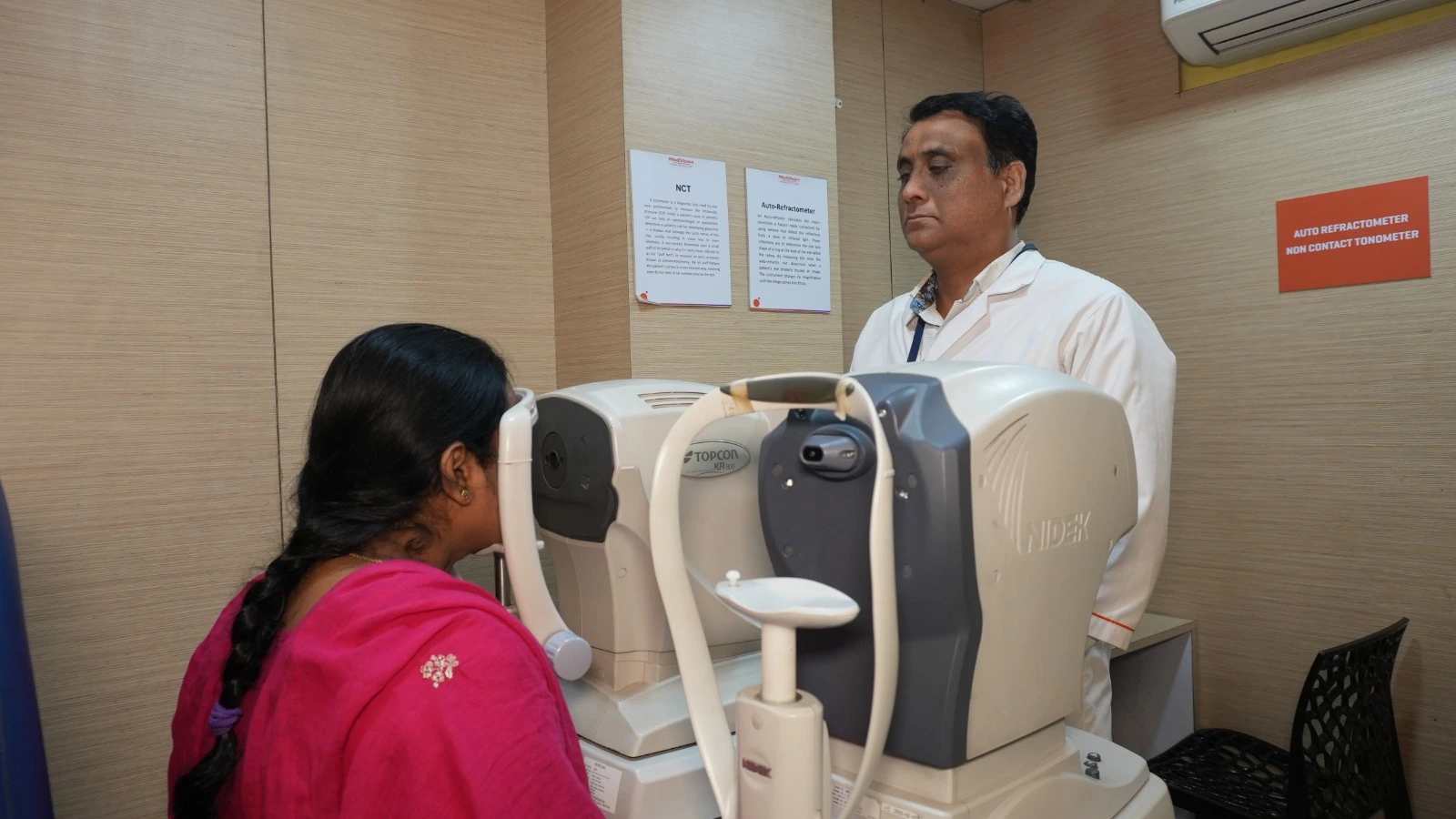
A dilated examination gives you a straight answer in one visit: whether there is a cataract, how far along it is, whether the retina and optic nerve are healthy, and roughly how long you can reasonably leave it. Often the answer is that nothing needs doing yet, which is worth hearing. You can read more on our cataract page, see what a full check covers under comprehensive eye care, or book at any of our five centres, including Warangal and Nalgonda, both open seven days a week.