These are the questions that come up in almost every LASIK consultation at our KPHB centre. Answers are as plain as we can make them, including where the honest answer is "it depends" or "you are not a candidate".
Am I suitable?
What decides whether I can have LASIK?
Five things, roughly in order of importance: corneal thickness, corneal shape, your spectacle power, whether that power has been stable, and the health of the rest of the eye. The scan that matters most is corneal topography, which maps the surface of the cornea. If it shows an irregular pattern suggesting keratoconus, laser surgery is off the table permanently, because reshaping a cornea that is already weakening makes it worse.
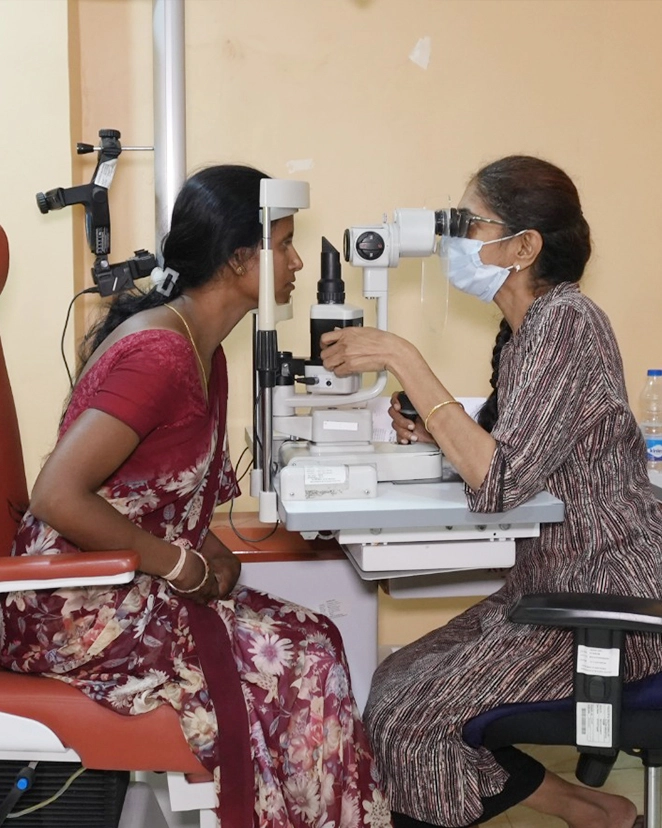
The full evaluation takes two to three hours. Your eyes are dilated, so bring someone to drive you home and do not plan anything that needs sharp vision for the rest of the day.
My power keeps changing. Can I still do it?
Not yet. We want at least a year, ideally two, with no meaningful change in your prescription. If your power is still moving, the laser corrects where you are today and your eye keeps drifting away from it. Most people stabilise in their early twenties, but some do not until later, and a few with high myopia never fully stabilise.
I have a very high power. Is there a limit?
Yes. Roughly, LASIK works well up to about -8 dioptres of myopia, with the exact ceiling depending on how thick your cornea is. Beyond that, or where the cornea is thin, removing enough tissue to correct the power leaves too little behind, and the cornea can bulge forward years later. For those eyes an implantable lens (ICL) placed inside the eye is usually the better answer. It is a different operation with a different risk profile, and we will say so rather than stretch LASIK past where it belongs.
What about dry eyes, or wearing contact lenses?
Existing dry eye needs treating before surgery, not after, because LASIK temporarily makes dryness worse. If you wear contact lenses, stop them before the evaluation: about a week for soft lenses, two to three weeks for rigid ones. Lenses mould the cornea, and the scan will be inaccurate if you have worn them recently.
The procedure itself
Does it hurt?
No. Anaesthetic drops numb the surface completely. You feel pressure when the suction ring is applied for a few seconds, and the vision dims briefly during that step, which surprises people who were not warned. There is no injection and no needle.
Afterwards is different. For roughly four to six hours the eye burns, waters and feels like there is grit in it. That is normal and it passes. Most patients sleep through it. Standard PRK, by comparison, is genuinely uncomfortable for three to four days, which is one reason it is now reserved for specific corneas rather than used routinely.
How long does it take?
Around ten to fifteen minutes for both eyes in the theatre. The actual laser time per eye is measured in seconds. You are in the hospital for about two hours in total including preparation and the first check.
What is the difference between LASIK, SILK and SMILE?
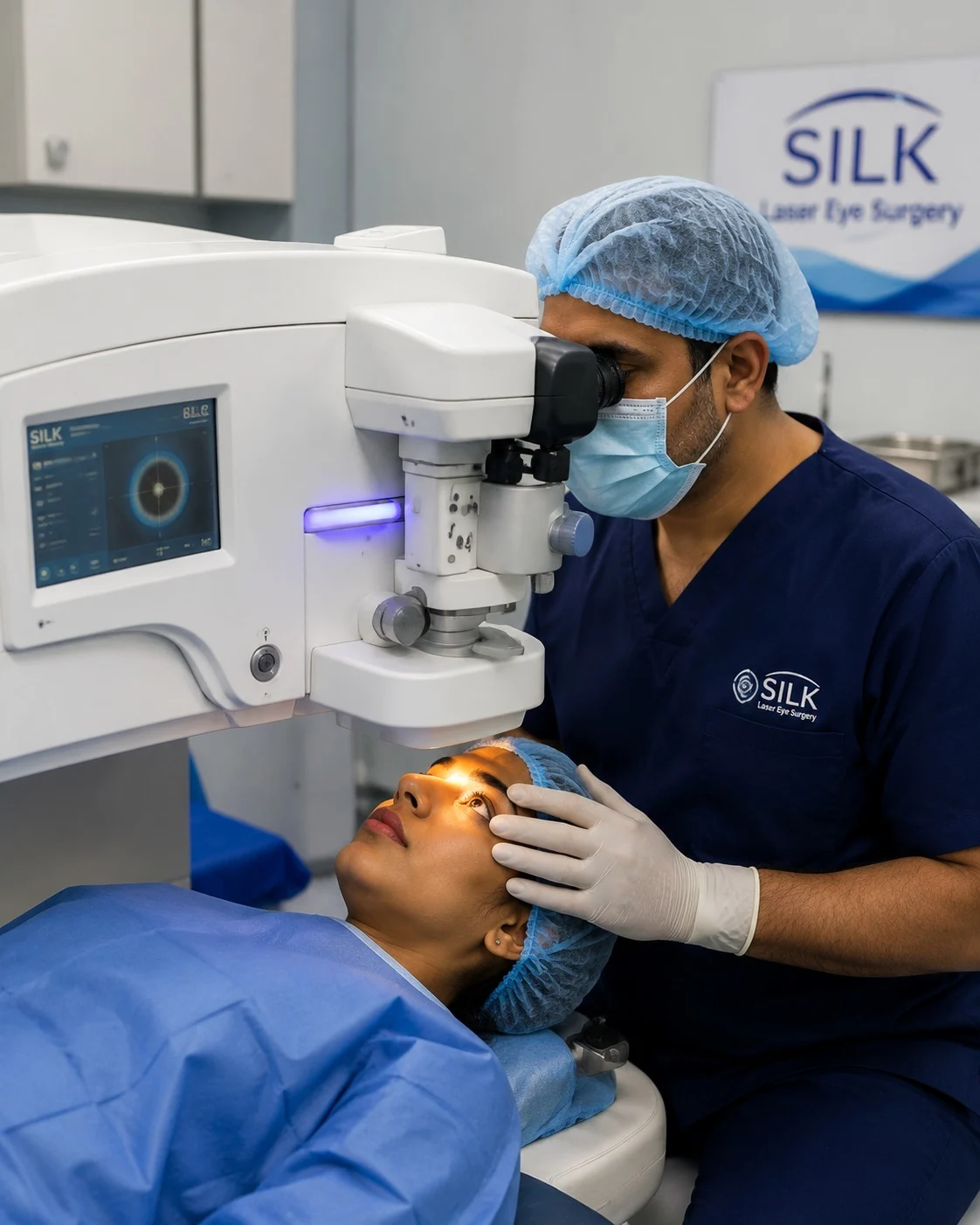
LASIK creates a thin flap in the cornea, lifts it, reshapes the tissue underneath with an excimer laser, and replaces the flap. SILK and SMILE are flapless. A femtosecond laser carves a thin lens-shaped piece of tissue inside the cornea and it is removed through a small opening, leaving the surface largely intact.
Flapless procedures suit people in contact sports or dusty work where a flap is a long-term consideration, and they tend to disturb the corneal nerves less, so dry eye is usually milder. LASIK still handles a wider range of prescriptions, particularly hyperopia and mixed astigmatism, and is easier to fine-tune later. We run SILK on the ELITA platform at Masab Tank and KPHB only. Which one suits you comes out of the scans, not out of preference.
Recovery and results
When will I see clearly?
Most people see well enough to move around normally the next morning, and functional vision at the one-day check is the norm. Fine tuning continues for weeks. Expect fluctuation in the first month, particularly in the evening and on screens, and some haziness that clears.
Practical timings: no eye rubbing at all for a month, no swimming or gym for two weeks, screens in short spells from day two, driving once you are reviewed and cleared. Drops continue for several weeks on a tapering schedule. Skipping them causes more problems than anything else we see.
Will I get 6/6 vision?
Usually, but not guaranteed. The realistic promise is that you will be free of glasses for most daily activity. A small number of patients end up with a residual power of half a dioptre or so, enough to want glasses for night driving. A smaller number need an enhancement procedure later, which is possible if the cornea has enough thickness left.
Will I still need reading glasses?
Yes, eventually, and this is the point most often glossed over. LASIK corrects distance vision. It does nothing about presbyopia, the age-related stiffening of the natural lens that makes near work difficult from the mid-forties onward. If you are 38 and have LASIK, you will very likely be reaching for reading glasses within a decade. That is not a complication. It is normal ageing, and it would have happened anyway.
Does it wear off?
The laser correction itself is permanent. Your eye, however, continues to age. A cataract will still form in your sixties or seventies, and it can still be treated. Tell your surgeon then that you have had LASIK, because the lens power calculation for cataract surgery needs adjusting in eyes that have been lasered.
Cost and risk
What does it cost?
In Hyderabad, LASIK generally runs from around Rs 40,000 to Rs 1,10,000 for both eyes depending on the technique. Standard LASIK sits at the lower end, bladeless and wavefront-guided treatments in the middle, and flapless SILK at the upper end. What moves the price is the platform used and the complexity of your correction, not the length of the consultation. Ask for the figure in writing, and ask specifically whether the pre-operative evaluation, the drops and all follow-up visits are included. Refractive surgery is elective, so insurance almost never covers it.
What can go wrong?
Serious complications are uncommon but not zero. Dry eye lasting more than six months, night glare and halos, undercorrection or overcorrection, flap wrinkling in the first day, and infection are the recognised ones. Very rarely, the cornea weakens progressively afterwards, which is why the screening scans matter far more than the surgery itself. Anyone who tells you the risk is nil is not being straight with you.
If you are considering it, the sensible next step is the evaluation, not a decision. Roughly one in five people who come for a LASIK assessment turn out to be better served by something else, and finding that out costs you an afternoon. Our KPHB centre runs refractive clinics until 8:30pm, and you can see the full range of options before committing to any of them.