The honest answer to which procedure is better is that the question is framed wrongly. LASIK and SILK are not ranked. They are two ways of doing the same job, and your cornea decides which one fits. A patient with a thin, slightly irregular cornea and a patient with a thick, perfectly regular one should not receive the same recommendation, and if a clinic gives both the same answer without measuring, something is wrong.
What follows is the reasoning we actually use in the refractive clinic, so you can follow the conversation instead of just receiving a verdict.
What the two procedures do differently
In LASIK, a femtosecond laser creates a thin hinged flap in the front of the cornea. The flap is lifted, an excimer laser reshapes the tissue underneath to correct your power, and the flap is replaced. Vision recovers quickly, often overnight. It has been done for three decades and the long-term data behind it is enormous.
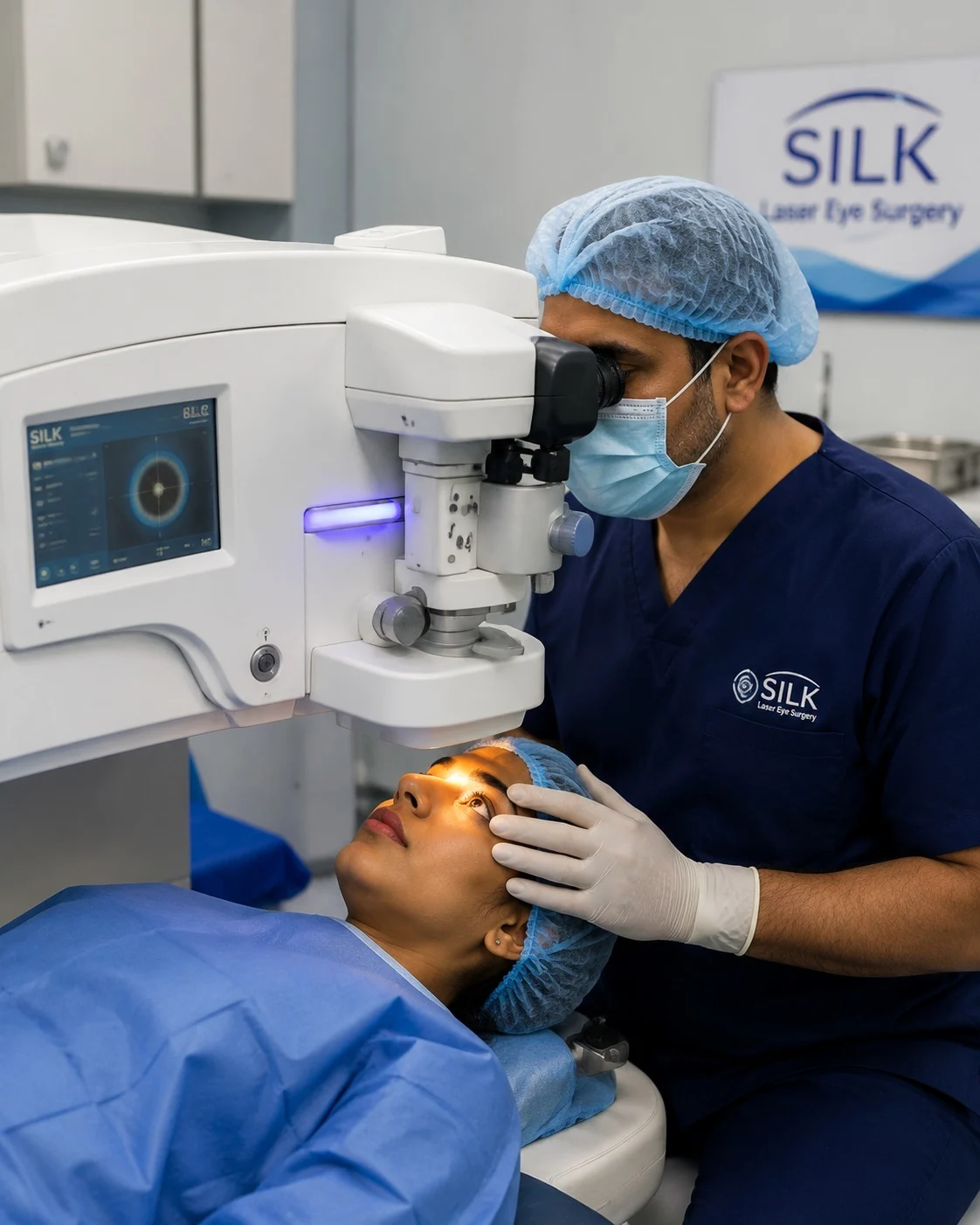
In SILK, performed on the ELITA platform, there is no flap. A single femtosecond laser carves a thin contact-lens-shaped piece of tissue, called a lenticule, inside the intact cornea, and it is removed through a small incision of two to three millimetres. The front surface stays largely undisturbed.
That structural difference produces the real trade-offs:
- No flap means no flap complications. Flap displacement is rare after LASIK, but it is a lifetime consideration for people in contact sports, the armed forces or physically demanding work. SILK removes that concern.
- Fewer corneal nerves are cut. A flap cuts across the surface nerves that drive tear production, which is why dry eye is common for a few months after LASIK. A small incision cuts far fewer. For someone who already has borderline dry eye, this matters.
- LASIK recovers faster in the first few days. SILK vision is usually good the next day too, but LASIK typically sharpens marginally sooner.
- LASIK handles hyperopia. SILK, at present, does not. If you are plus-powered, the discussion is about LASIK or PRK, not SILK.
The measurements that decide it
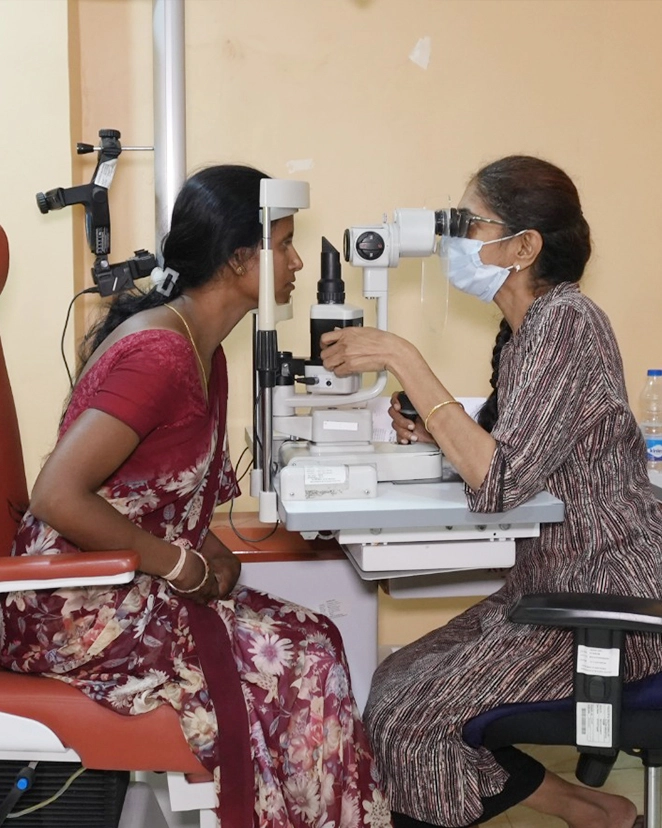
Almost nothing in this decision comes from how you feel about the two names. It comes from a two to three hour workup. Four numbers do most of the work.
Corneal thickness. Every dioptre corrected consumes tissue. What matters is how much cornea remains untouched underneath the treatment, because that residual bed is what holds the shape of your eye for the next forty years. Leave too little and the cornea can slowly bulge forward, a serious complication called ectasia. Thickness therefore sets a hard ceiling on how much power can be corrected safely, and in a thinner cornea SILK sometimes preserves more structural strength for the same correction. Sometimes neither procedure is safe, and we say so.
Corneal topography and tomography. This maps the shape of the front and back surfaces. We are looking for early keratoconus, a condition where the cornea is already thinning and bulging. Laser correction in such an eye accelerates the problem. Suspicious topography is the single most common reason we decline an otherwise healthy candidate, and it is the one finding that no amount of patient enthusiasm should override.
Your power and cylinder. Both procedures handle common ranges of myopia and astigmatism well. Very high powers approach the tissue limits described above, and in some of those eyes an implantable contact lens is the better answer than any laser.
Tear film quality. Measured, not guessed. Significant untreated dry eye is a reason to postpone, treat it for six to eight weeks, and re-measure. Operating on a dry eye gives poor optical results and a miserable recovery.
Who should have neither
This is the part usually left out. You are not a candidate, or not yet a candidate, if any of the following apply:
- Your spectacle power has changed by more than about half a dioptre in the last year. Stability first, surgery later.
- You have keratoconus or clear signs of it developing.
- Your cornea is too thin for the correction you need.
- You have uncontrolled dry eye, active surface inflammation or an untreated retinal problem.
- You are pregnant or breastfeeding. Hormonal changes shift both the refraction and the tear film. Wait.
- You are over about forty-five and hoping to stop wearing glasses entirely. Laser correction fixes distance vision. It does not stop presbyopia, and you will still need reading glasses. If nobody has told you this clearly, ask.
Turning someone away is not a failed consultation. It is the consultation working.
Cost, honestly
In Hyderabad, laser vision correction generally runs from roughly seventy thousand rupees for both eyes at the standard end, up to around a lakh and a half for the most advanced flapless platforms. The spread is driven by the technology used, whether the treatment is customised to your individual corneal map, and the surgeon and hospital. SILK sits at the upper end because the laser platform itself is expensive.
Two things worth knowing. Refractive surgery is elective, so insurance almost never covers it. And a quoted price should include your pre-operative workup, the procedure, medication and the follow-up visits over the first few months. Ask what is included before comparing numbers between hospitals, because a cheap headline figure with tests and follow-ups billed separately is not cheap.
Where each is available
We perform both at Masab Tank and KPHB, which are the only two of our centres with the ELITA platform for SILK. KPHB runs until 8.30pm, which suits working patients who cannot take a full day off for the workup. Our Warangal and Nalgonda centres handle the full general eye care workload but refer refractive cases to Hyderabad. Badvel does not offer laser correction at all.
The useful next step is the workup itself, not more reading. Come without contact lenses for at least a week if you wear soft lenses, longer for rigid ones, since lenses distort the corneal map we depend on. Book through our refractive department or call +91 90001 80035, and set aside half a day.