For a meaningful number of people who come in asking about LASIK, the correct answer is no, or not yet. That is not a failure of the technology. Laser correction has a narrow entry gate on purpose, because the operation permanently removes tissue from a structure that cannot be put back. Knowing which side of that gate you are on is worth more than any amount of reading about the procedure itself.
The straightforward yes
You are likely to be a good candidate if most of the following are true.
- You are over 18, and preferably over 21.
- Your prescription has not changed meaningfully for at least a year, ideally two.
- Your power sits in the usual treatable range — short-sightedness up to somewhere around minus 8, moderate long-sightedness, astigmatism up to about 5 or 6 dioptres. Where exactly your limit falls depends on how thick your cornea is.
- Your cornea is of normal thickness and, more importantly, a regular shape.
- Your eyes are otherwise healthy — no significant dry eye, no cataract forming, no glaucoma, a healthy retina.
- You are not pregnant or breastfeeding.
- You understand what the operation does and does not promise.
People in this group generally do very well. Comfortable within hours, seeing well the next morning, back at a desk in a day or two. It is one of the more predictable elective procedures in medicine, which is precisely why the screening is strict.
The firm no
Some findings close the door, and it is better to hear this before you have organised leave from work.
An irregular corneal topography. This is the big one. If the scan shows a pattern suggesting keratoconus or another form of corneal weakening, laser correction is off the table — permanently, not just for now. Reshaping a cornea that is already thinning makes it worse, and the resulting ectasia is far harder to live with than glasses. If this is what your scan shows, the useful next step is a cornea clinic assessment, because early keratoconus itself can be stabilised.
A cornea too thin for your prescription. Correction and thickness are linked: the higher your power, the more tissue must go. If the arithmetic leaves less than a safe residual bed, LASIK is out. Surface treatment or an implantable lens may still work.
Severe dry eye that does not respond to treatment. LASIK divides corneal nerves and makes dryness worse for months. Starting from a tear film that is already failing is a recipe for a miserable year.
Uncontrolled eye disease. Active glaucoma, significant cataract, uncontrolled diabetic retinopathy, active inflammation — each of these needs treating in its own right first, and some of them change the answer entirely. If a cataract is forming, treating it with a lens implant deals with your spectacle power at the same time; there is no sense in doing laser first.
Certain systemic conditions. Autoimmune disease affecting healing, some medications, and poorly controlled diabetes all raise the risk enough to warrant a straight conversation rather than a booking.
The not yet
This group is larger than people expect, and the delay is usually temporary.
- A prescription still moving. Most eyes settle in the early twenties, some later. Operating on a moving target means your vision drifts away from the correction within a few years. Wait, and bring your old prescriptions to the consultation so we can see the trend.
- Pregnancy or breastfeeding. Hormonal changes shift refraction and tear film, and the medication after surgery is best avoided. Wait until a few months after you have stopped feeding, then have your power rechecked.
- Treatable dry eye. Very common, particularly among people who spend nine hours a day at a screen. Two to three months of proper treatment often moves someone from unsuitable to suitable.
- Untreated retinal thinning. Short-sighted eyes are longer eyes, and long eyes have thin patches at the retinal periphery. If the dilated examination finds a weak area, it is sealed with a laser first and the refractive surgery follows.
- Contact lens wear before the scans. Lenses temporarily reshape the cornea. Soft lenses need to be out for at least a week and rigid lenses considerably longer, otherwise the most important measurement of the whole workup is unreliable.
What LASIK will not do
Even a perfect result has boundaries, and being clear about them prevents a lot of disappointment.
It does not stop presbyopia. Somewhere in your forties the lens inside the eye stiffens and near focus fades. That happens whether or not you have had laser surgery. If you are short-sighted today, you currently read by taking your glasses off; correct your distance vision fully and reading glasses will arrive, on schedule, and feel like a step backwards if nobody warned you.
It does not prevent cataract, glaucoma or retinal problems. Your eye keeps ageing normally, and if you were highly myopic you keep the higher retinal risk that comes with a long eye. Annual checks still apply.
It does not guarantee you will never wear glasses again. Most suitable patients reach driving-standard vision without correction. A minority end up slightly under-corrected and use a thin prescription for night driving.
How to find out where you stand
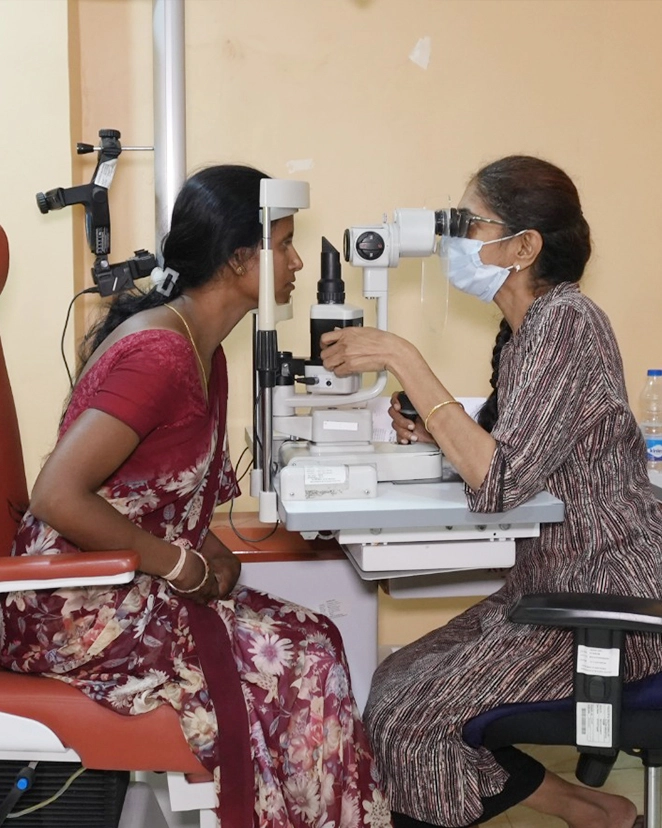
The only way to know is to be measured. A full refractive workup takes two to three hours, includes corneal mapping, thickness measurement, pupil assessment, tear film testing and a dilated retinal examination, and ends with a specific recommendation — which may be LASIK, may be a surface or flapless procedure, may be an implantable lens, and may be that you should carry on with glasses for now.
Bring your spectacle prescriptions from previous years, stop contact lenses beforehand, and arrange for someone to drive you home. We run refractive assessments at Masab Tank and KPHB, and general eye examinations at all five centres. If the answer turns out to be no, you will be told why, in terms of your own scans.